
maintenance
An Owner's Guide to Fall Landscape & Pool Preparation
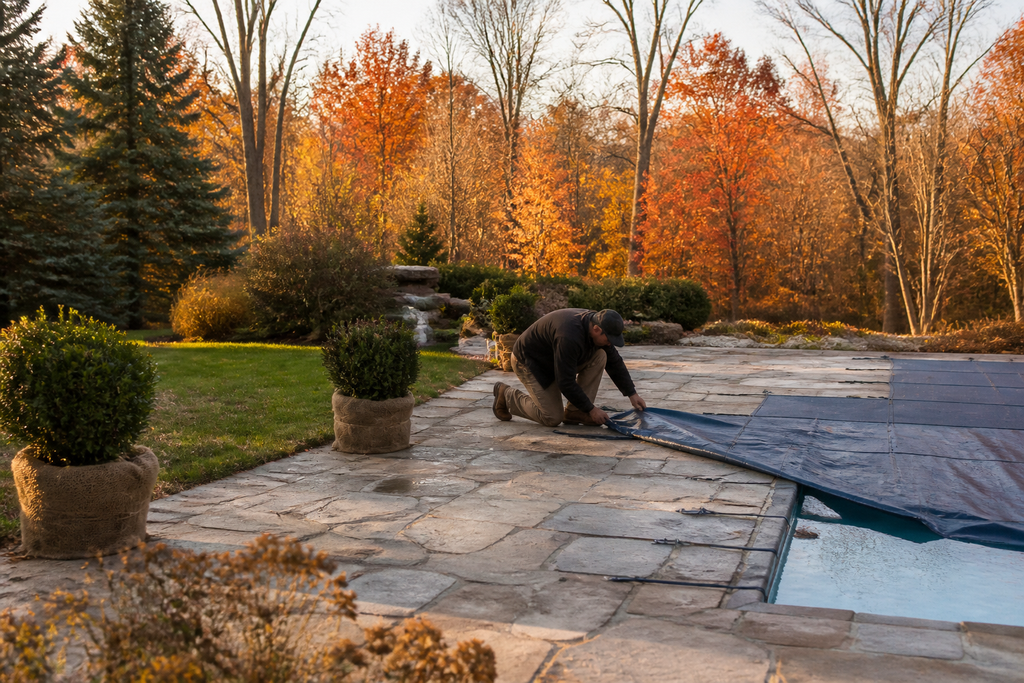
Fall landscape preparation is the process of systematically readying your gardens, pool, irrigation, and hardscapes for the coming winter. For properties in the Headwaters region, this involves more than a simple cleanup; it’s a crucial set of tasks that protect your investment and ensure a healthy, vibrant landscape next spring.
There's a particular quietness to a landscape in late fall. The vibrant chaos of summer gives way to a more structured beauty—the strong lines of bare trees, the deep green of conifers, and the crisp rustle of oak leaves underfoot. This is the season for enjoying the last warm afternoons on the patio and ensuring the property you love is safely put to bed for the winter.
Properly closing down your landscape isn't just a chore; it's the final, caring step of the season. It’s about protecting the significant investment you've made in your outdoor spaces. A thorough, professional shutdown ensures that when the snow melts, your gardens, pool, and structures emerge healthy and ready for another year of enjoyment.
The Pool Shutdown: More Than Just a Cover
Closing your in-ground pool for an Ontario winter is a technical process that goes far beyond simply pulling a safety cover over the water. A proper shutdown is critical to protecting the expensive plumbing, equipment, and the pool structure itself from the immense pressure of ice and frost.
For a gunite pool, the process is precise. Our team’s approach focuses on a few key areas:
- Water Chemistry: We balance the water chemistry one last time, adding winterizing algaecides and chemicals. This prevents the water from turning into a green swamp under the cover, making for a much easier spring opening.
- Lowering Water Level: The water is lowered to just below the skimmer and return jets. This ensures that freezing water inside the skimmer body won't crack the plastic or surrounding concrete.
- Blowing Out the Lines: This is the most critical step. We use a high-volume air compressor to force every drop of water out of the plumbing lines—from the skimmers, main drain, and returns back to the equipment pad. Each line is then sealed to prevent water from re-entering.
- Winterizing Equipment: The pump, filter, heater, and any water features are fully drained. Plugs are removed, and sensitive equipment is protected.
Preparing Garden Beds for a Long Winter's Nap
As the garden's energy retreats into the soil, our focus shifts from growth to protection. The decisions we make now directly impact the health and vibrancy of your beds next spring. The question of what to cut back and what to leave is a common one.
Our approach balances aesthetics with ecology. We recommend leaving the sturdy stems and seed heads of plants like Purple Coneflower (Echinacea), Black-Eyed Susan (Rudbeckia), and ornamental grasses like Switchgrass (Panicum). They provide crucial structure and texture to the winter landscape and offer a food source for birds.
However, we do cut back soft-bodied perennials like Hostas and Daylilies. Their foliage turns to a soggy mess over winter, which can promote disease and pests. After cutting back, we apply a layer of compost and a top dressing of mulch, often using the property's own shredded leaves.
Fall is also the perfect time to plant spring-flowering bulbs like Daffodils, Tulips, and Alliums. Planting them now gives them the cold period they need to put on a spectacular show next spring.
Protecting Your Trees and Shrubs from Winter Damage
A mature, well-established tree can handle an Ontario winter, but younger trees and certain shrubs need a bit of help. The combination of heavy snow, ice, hungry animals, and drying winds can cause significant damage.
Here is a checklist of tasks our garden maintenance teams focus on each fall:
- **Burlap Wrapping:** We wrap vulnerable evergreens like **Yews** and **Boxwoods**, especially those near driveways or roads, to protect them from salt spray and winter burn. Delicate, multi-stem trees like a young **Japanese Maple** are also wrapped to prevent snow load from splaying or breaking their branches.
- **Rodent Guards:** A plastic spiral guard is placed around the base of young fruit trees and other smooth-barked species to prevent mice and voles from girdling the trunk under the snow.
- **Deep Watering:** Before the ground freezes solid, we give all evergreens and any trees or shrubs planted within the last two years a long, deep watering. This helps them hydrate before the ground locks up, preventing winter desiccation.
- **Anti-Desiccant Spray:** For broadleaf evergreens like **Rhododendrons**, a waxy anti-desiccant spray can be applied to the leaves to help them retain moisture against harsh winter winds.
Inspecting and Securing Hardscapes and Structures
Winter's greatest force against your landscape is the freeze-thaw cycle. Water seeps into tiny cracks, freezes, expands, and then thaws, repeating the process and slowly pushing apart stone, concrete, and wood. A fall inspection is your best defence.
Our teams walk the property to inspect every element of the built landscape. We check natural stone patios and walkways for any rocking or shifting pavers. We examine retaining walls for signs of bulging or movement. Catching a small issue in the fall can prevent a major failure after a hard winter.
A well-built landscape is designed to accommodate the realities of our climate, but an annual check-up is essential preventative medicine.
This is also the time for general tidying of your outdoor living spaces. Patio furniture is cleaned and stored, planters are emptied and stored upside-down to prevent cracking, and the gutters on any pavilions or cabanas are cleared of leaves to prevent ice dams.
Winterizing Your Irrigation System
Of all the fall shutdown tasks, winterizing the irrigation system is the one with the least margin for error. Even a small amount of water left in a pipe or sprinkler head will freeze and burst, leading to leaks that may not be discovered until spring.
The only correct way to winterize an irrigation system is with a professional blowout. This involves connecting a large air compressor to the system and, zone by zone, using high-volume air to push every last bit of water out through the sprinkler heads. It's a loud, thorough process that ensures the entire network of pipes is empty and safe.
This is a job exclusively for professionals with the right equipment. The pressure must be high enough to clear the lines but regulated carefully to avoid damaging the sprinkler heads or valves. Once complete, the system controller is shut down for the season.
Why Professional Fall Service is an Investment
Thinking about everything involved can feel overwhelming, which is why many of our clients entrust their fall preparations to our team. A professional shutdown service isn't an expense; it's a way to protect the value and integrity of your property. It provides peace of mind that every component, from the smallest sprinkler head to the deep plumbing of the pool, is secured correctly.
It also frees you up to simply enjoy this beautiful, fleeting season. While we handle the technical work, you can focus on crisp morning walks and evenings by the fire pit. It's also the perfect time to start dreaming and planning for the seasons ahead, turning your attention toward smart fall projects to plan for next spring's landscape.
As the days grow shorter and the air gets colder, there's a deep satisfaction in knowing your property is prepared. For homeowners across Hockley Valley, Caledon, and The Blue Mountains, a thoughtful fall shutdown is the bridge that connects the joy of this year's landscape to the promise of the next. If you'd like to discuss a comprehensive maintenance plan for your property, please get in touch with our team.
Frequently asked
Questions, answered
- When is the best time to close my pool in Ontario?
- We typically advise clients to close their pools between late September and mid-October. Closing it too early shortens your season, but waiting too long risks damage from an early, hard frost. We schedule based on weather forecasts and your property's specific microclimate.
- Can I leave some perennials standing over winter?
- Absolutely. We encourage leaving sturdy perennials like ornamental grasses, coneflowers, and sedum 'Autumn Joy' standing. They provide beautiful winter structure, catch snow, and offer food and habitat for birds.
- What's involved in a professional fall cleanup service?
- Our full-service fall cleanup includes leaf removal from lawns and gardens, perennial cutbacks, winter protection for sensitive shrubs using burlap, a final lawn mow, and clearing debris from hardscape areas like patios and walkways.
- Do I need to wrap all my shrubs in burlap?
- No, only certain ones require it. We focus on broadleaf evergreens like rhododendrons and yews, especially if they are young or exposed to salt spray and wind. Most deciduous shrubs and hardy conifers do not need wrapping.
- Is it too late in the fall to plant anything?
- Early to mid-fall is the ideal time to plant spring-flowering bulbs like tulips and daffodils. It's also an excellent time to plant many trees and shrubs, as the cool, moist soil encourages strong root development before the ground freezes.
Related on the site
Start a conversation
Planning a project in the Headwaters region?
We design and build across Hockley Valley, Caledon, Mulmur, Mono, King, and The Blue Mountains. Tell us about your property and we'll take it from there.
Book a discovery call →