
pools
Concrete vs. Vinyl vs. Fiberglass Pools: What We Choose for an Ontario Estate Property
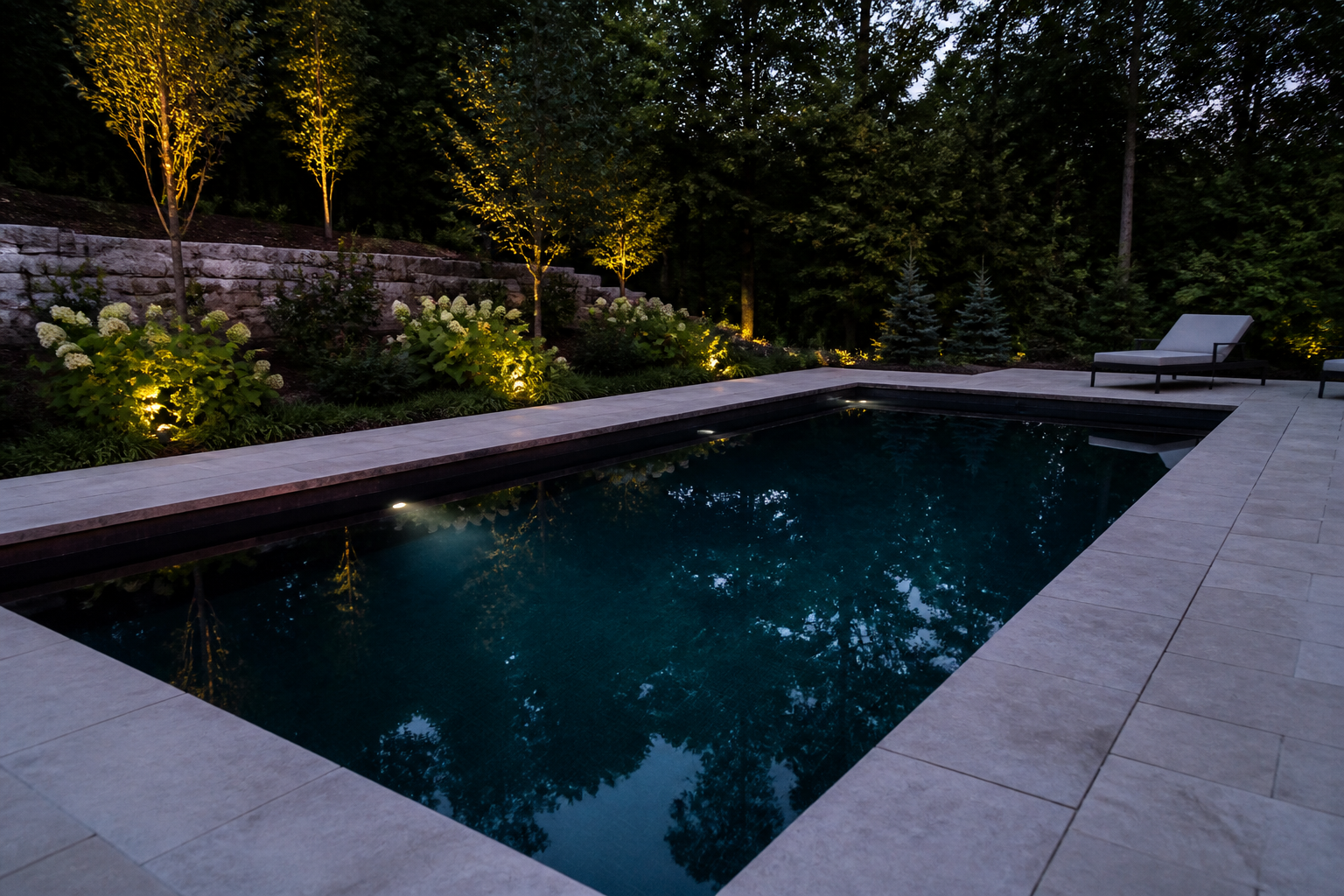
For an estate property in Ontario, a concrete (gunite) pool is almost always the superior choice. Its complete design flexibility allows it to be shaped to your property and lifestyle, while its permanence and durability are unmatched. Vinyl and fiberglass pools, while having a lower initial cost, come with significant compromises in customization, longevity, and overall aesthetic integration.
Beyond the Blue Rectangle: Envisioning Your Pool
Imagine your morning coffee on the terrace, the only sound a gentle spillover from your pool’s waterfall edge. Think of the view from the kitchen window in the summer, looking out over a dark-bottomed pool that melts into the surrounding gardens.
A pool is not just a place to swim; it's the heart of your summer, the centrepiece of your property’s social life, and a major architectural element of your home.
When you begin planning, the first major decision is the pool's structure. The choice between the three main types—concrete, vinyl liner, and fiberglass—will dictate everything from the pool's shape and feel to its long-term durability and how well it integrates with your home and land. For the estate properties we work on, this choice is critical.
The Case for Concrete (Gunite) Pools
When we talk about a concrete pool, we’re typically referring to a gunite pool. This method involves spraying a mix of concrete and sand over a dense grid of steel rebar built inside the excavated hole. The resulting monolithic shell is incredibly strong, durable, and permanent.
The single biggest advantage of concrete is total design freedom. Do you want a pool that curves around a treasured oak tree? A design with a shallow tanning ledge for lounging and a deep end for diving? An infinity edge that seems to disappear into the Hockley Valley view? With concrete, it’s all possible. This flexibility is why it's the go-to choice for high-end, custom pool design.
Key benefits include:
- Unlimited Customization: Any shape, size, or depth is possible. We can integrate features like built-in spas, benches, tanning shelves, and custom steps seamlessly into the structure.
- Durability: A properly engineered gunite shell is built to last a lifetime, easily handling Ontario’s demanding freeze-thaw cycles.
- Premium Finishes: The interior can be finished with a variety of materials, from classic smooth plaster to durable pebble aggregates and luxurious all-tile surfaces, allowing for complete control over the water's final colour and texture.
Understanding Vinyl Liner Pools
A vinyl liner pool consists of a flexible, pre-fabricated liner set into an excavated hole that's supported by a wall system, usually made of steel or polymer panels. This has long been a popular option for backyard pools, primarily because of one factor: a lower initial installation cost.
However, for an estate property, the trade-offs are significant. The shapes are largely limited to pre-engineered kits—think rectangles, L-shapes, and kidneys. While some customization is possible, you can’t achieve the free-form, organic shapes that make a pool feel truly integrated with the natural landscape.
The most critical consideration is the liner itself. It's a wearable component.
- Replacement Cycle: A vinyl liner typically needs to be replaced typically every 7-12 years. This is a significant, recurring expense and hassle that isn't a factor with a concrete pool's permanent finish.
- Vulnerability: The material is susceptible to punctures and tears from sharp objects, pet claws, or even fallen branches, leading to costly repairs.
- Feel: The surface feels softer and less substantial underfoot than a solid concrete finish, which can detract from the premium experience.
What About Fiberglass Pools?
Fiberglass pools are factory-molded shells, produced in a wide variety of shapes and sizes and then delivered to the site as a single piece. A crane lowers the shell into a prepared excavation. The main selling points are the speed of installation and the smooth, non-porous gelcoat finish, which is resistant to algae.
While this sounds appealing, fiberglass presents the most significant limitations for a custom project. The designs are entirely restricted to what the manufacturer offers and what can legally and physically be shipped over the road. For a large country property, these size constraints are often a non-starter.
Furthermore, they are not ideal for the varied topography of our service area. The shell requires a perfectly flat and stable base of compacted gravel. On a sloped site in Mulmur or The Blue Mountains, this often requires extensive retaining walls and earthwork that can negate the cost savings and create a 'dropped-in' look that feels disconnected from the surrounding landscape.
A truly integrated landscape feels like it belongs to the land; a pre-fabricated shape rarely achieves this.
A Comparison: Pool Types at a Glance
To make the decision clearer, here’s how the three types stack up on the factors that matter most for an estate home.
| Feature | Concrete (Gunite) | Vinyl Liner | Fiberglass |
|---|---|---|---|
| Design Freedom | Unlimited. Any shape, size, depth, or feature. | Limited to kit shapes. Some customization possible. | Highly limited to pre-made factory molds. |
| Durability & Longevity | Permanent structure. Shell lasts a lifetime. | Liner needs replacement typically 7-12 years. | Shell is durable, but susceptible to shipping/install stress. |
| Look & Feel | Solid, premium feel. Finishes from plaster to pebble to tile. | Soft, flexible feel. Visible seams and hardware. | Smooth, plastic-like feel. Molded steps can look unnatural. |
| Ideal Site | Any site, including complex slopes and difficult access. | Best for flat, stable sites with easy access. | Requires a perfectly level base and wide-open crane access. |
| Lifetime Cost | Highest initial cost; lowest long-term cost due to permanence. | Lowest initial cost; higher lifetime cost due to liner replacements. | Mid-range initial cost; potential for surface repair costs. |
Integrating the Pool with Your Landscape Master Plan
The choice for us is clear. A concrete pool is not just a product; it’s a piece of architecture. It allows our team to design the pool as part of a cohesive master plan for the entire property.
The pool’s edge can be shaped to create a perfect, flowing line with the adjoining Wiarton flagstone patio. We can build retaining walls from the same armour stone used elsewhere on the property and have the pool nestle right up against them. The steps leading into the water can mirror the angle of the steps leading from the house to the terrace.
That level of integration is only possible with a custom-built structure.
By thinking about the entire space at once, we ensure the final result is seamless. For more on this, see our guide to planning your pool surround, which covers everything from paving to privacy plantings.
This holistic approach is essential, especially when navigating the complex approvals process with bodies like the Niagara Escarpment Commission (NEC) or local conservation authorities, where a custom shape is often needed to respect setbacks and natural features.
The Right Choice for Your Property
While vinyl and fiberglass pools can be the right answer for a different type of project, they simply don't offer the permanence, creative freedom, or seamless integration that an estate property demands. A concrete pool is an investment in the core value and enjoyment of your home. It’s a permanent feature that can be tailored perfectly to your land, your home's architecture, and your family's lifestyle.
If you are considering a pool for your property in the Headwaters region or The Blue Mountains, the conversation should start with what you want your life to look and feel like. We design and build from there. When you're ready to start a project, our team is here to help you plan a pool that will be a source of enjoyment for decades to come.
Frequently asked
Questions, answered
- How long does it take to build a concrete pool in Ontario?
- A concrete pool build is a multi-stage process. From design and permitting to excavation and construction, a typical project can span several months and is often best planned across two seasons. The exact timeline varies widely with site complexity and weather.
- What kind of maintenance does a gunite pool need?
- Gunite pools require regular water chemistry balancing and weekly brushing of the surface to prevent algae. While the structure is permanent, our [garden maintenance](/services/garden-maintenance) services can include seasonal opening/closing and care of the surrounding pool area and plantings.
- Can you build an in-ground pool on a sloped property in Caledon or Mulmur?
- Yes, absolutely. This is where concrete pools are the only viable option. We use precise grading and integrated natural stone retaining walls to create a perfectly level and secure area for the pool, turning a challenging slope into a stunning multi-level feature.
- What are the best materials for a pool patio in Ontario?
- For a timeless look that withstands our climate, we almost always recommend natural stone. Wiarton or Eramosa flagstone are our preferred choices for pool surrounds as they are durable, beautiful, and connect with the local geology of Southern Ontario.
- Do I need a permit for a pool in Ontario?
- Yes. All in-ground swimming pools require a building permit from your local municipality. Depending on your property's location in the Headwaters, you may also require approvals from your local Conservation Authority (e.g., CVC, TRCA) or the Niagara Escarpment Commission (NEC).
Related on the site
Start a conversation
Planning a project in the Headwaters region?
We design and build across Hockley Valley, Caledon, Mulmur, Mono, King, and The Blue Mountains. Tell us about your property and we'll take it from there.
Book a discovery call →