
pools
Integrating an In-Ground Pool with Your Home's Natural Grading
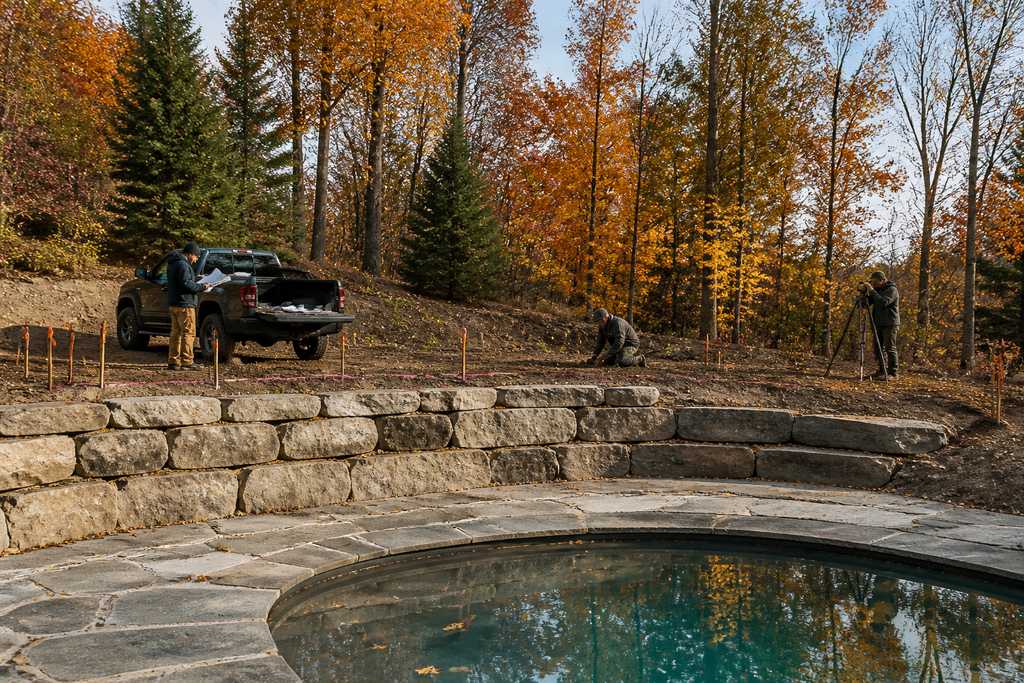
Integrating an in-ground pool with your property's natural grading means working with the existing slope rather than fighting it. By using strategic terracing, natural stone retaining walls, and proper drainage systems, you anchor the pool into the hillside. This creates a cohesive outdoor living space that feels like a natural extension of the land.
Reading the Land Before You Dig
Picture the view from your kitchen window in October. The leaves are turning, and the land rolls gently away from the house. In our region, a perfectly flat backyard is rare. When planning a pool design, the first step is understanding exactly how your property slopes.
We never want a pool to look like a spaceship that just landed on a hill. It needs to feel grounded. To achieve seamless pool integration, we have to read the land. We look at where the water naturally flows, the composition of the soil, and how the elevation changes from the back door to the property line.
During our initial site assessments, we evaluate several key factors:
- Elevation drop: How many feet the land falls over the proposed pool area.
- Soil composition: Heavy clay holds water, while sandy soil drains quickly.
- Existing water paths: Where spring snowmelt and heavy rain naturally travel.
- Access points: How heavy machinery will reach the backyard without damaging existing structures.
The Structural Backbone of Terracing
When you have a significant slope, you cannot simply dig a hole and drop a pool into it. The uphill side will cave in, and the downhill side will wash away. The solution is terracing. We step the land down in distinct levels, creating flat, usable spaces supported by retaining walls.
Terracing turns a difficult slope into a series of outdoor rooms. You might step out of the house onto a dining terrace, walk down three broad stone steps to the pool deck, and then look over a lower retaining wall to the lawn below. This approach is the foundation of effective landscape grading for pools.
| Retaining Material | Best Application |
|---|---|
| Natural Armour Stone | Large, sweeping curves and rustic estate settings. Excellent for holding back significant earth. |
| Poured Concrete with Veneer | Clean, modern lines. Ideal for tight spaces where a vertical wall is required right next to the pool. |
| Dry-Laid Fieldstone | Low garden walls and subtle grade changes. Offers a traditional, timeless aesthetic. |
Using natural stone for these walls ensures the structure feels native to the site. Limestone that warms to the touch by mid-morning provides a beautiful contrast to the cool blue of the water.
Managing Water and Drainage on a Slope
Water always flows downhill. When you interrupt a slope with a large concrete basin, that water needs a new place to go. If you ignore drainage during hillside pool construction, water will pool behind your retaining walls or around the pool shell.
This creates hydrostatic pressure (the force exerted by standing water). Over time, this pressure can crack concrete, push retaining walls forward, or even lift an empty pool out of the ground. Proper drainage is not optional; it is the most critical part of the build.
A well-designed pool on a sloped property is really just an elegant water management system in disguise.
To manage water effectively, we build invisible systems behind the beauty of the stonework:
- Clear gravel backfill: We place a thick layer of clean, crushed stone behind all retaining walls to let water drop quickly to the base.
- Weeping tile systems: Perforated pipes wrapped in landscape fabric catch the water at the base of the walls and carry it safely away from the pool.
- Surface grading: We pitch the stone pool deck slightly away from the pool, directing rainwater into hidden channel drains or adjacent garden beds.
- Catch basins: Strategic grates placed in low spots to handle sudden, heavy downpowers.
The Infinity Edge as a Grading Solution
Sometimes, the slope drops away so sharply that building a standard pool deck on the downhill side becomes impractical. This is where an infinity edge pool shines.
Instead of building a massive retaining wall to hold up a patio, we allow the water to spill over the lowered back edge of the pool into a hidden catch basin. The pool shell itself acts as the retaining wall. From the house, the water appears to blend seamlessly into the horizon or the tree canopy beyond.
Planning Your Hillside Build This Fall
If you want to be swimming next summer, right now—this fall—is the time to start planning. For a custom pool design, Ontario homeowners must navigate a complex web of permits, especially on sloped properties.
Municipalities and conservation authorities strictly regulate grading changes. They want to ensure your new pool won't send runoff flooding into your neighbour's yard or a nearby ravine. As a landscape design firm, we handle the engineering and grading plans required to secure these approvals.
Working with an experienced luxury pool builder means these timelines are managed proactively. By finalizing the design before the snow flies, we can secure permits over the winter and be ready to break ground as soon as the spring thaw allows.
Softening the Hardscape with Deep-Rooted Planting
Retaining walls and stone terraces are heavy, structural elements. To make the pool feel like a natural part of your property, we have to soften that hardscape with thoughtful planting.
On slopes, plants do more than just look good—they do the heavy lifting of holding the soil in place. We select species with deep, fibrous root systems that bind the earth and prevent surface erosion.
We often plant sweeping masses of ornamental grasses, like switchgrass, which catch the autumn breeze. We mix these with resilient native shrubs like serviceberry, and edge the shaded stone steps with Japanese forest grass. This layered approach to planting blurs the lines between the engineered pool environment and the wilder edges of your property.
Frequently asked
Questions, answered
- Can you build a pool on a very steep slope?
- Yes, but it requires significant engineering. We use terracing, heavy armour stone retaining walls, and sometimes an infinity edge design to anchor the pool safely into a steep grade in the Headwaters region.
- Do I need special permits for a hillside pool?
- Almost always. Changing the natural grade requires a site alteration permit, and if your property borders a protected area, you will also need conservation authority approval. We handle these grading plans during the design phase.
- Why is drainage so important for sloped pools?
- Water naturally runs downhill. If it pools behind the retaining walls or around the pool shell, it creates hydrostatic pressure that can crack concrete or shift the stonework. We install extensive clear gravel and weeping tile systems to prevent this.
- When should we start planning a sloped pool project?
- Fall is the best time to start. Designing the grading plan and securing municipal permits often takes several months over the winter, ensuring we are ready to excavate as soon as the ground thaws in spring.
Related on the site
Start a conversation
Planning a project in the Headwaters region?
We design and build across Hockley Valley, Caledon, Mulmur, Mono, King, and The Blue Mountains. Tell us about your property and we'll take it from there.
Book a discovery call →