
planting
A Homeowner's Guide to Drought-Tolerant Plants for Ontario
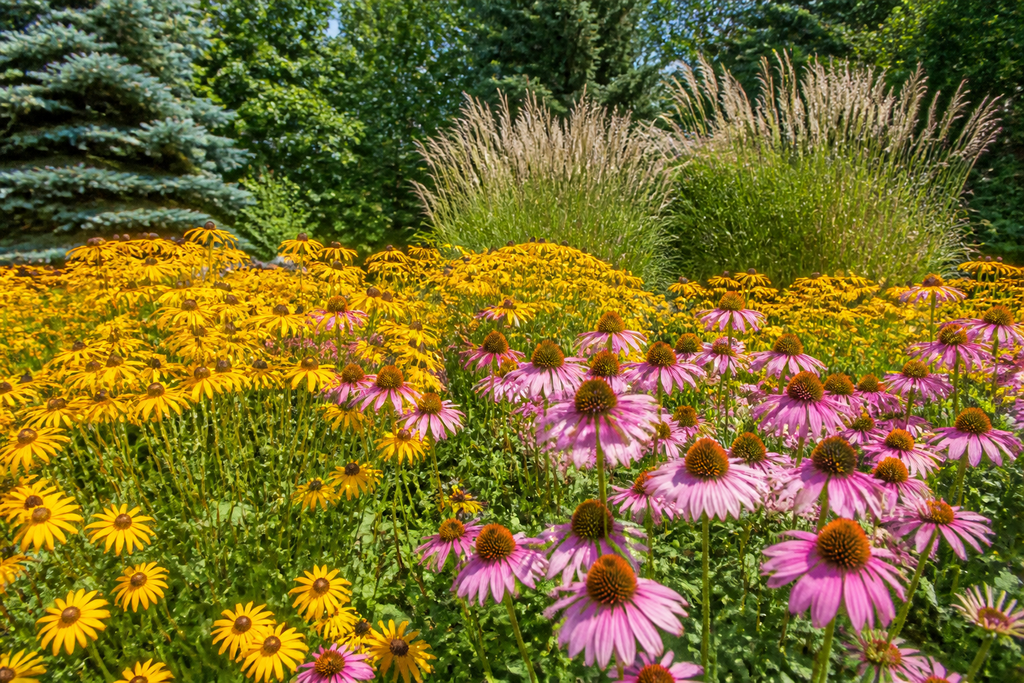
For a sun-drenched property in the Headwaters region, choosing drought-tolerant plants is key to a landscape that looks lush even in the driest weeks of summer. The best choices for Ontario include perennials like Coneflower, Yarrow, and Sedum, and grasses like Switchgrass, which establish deep roots and require minimal watering once mature.
Imagine looking out your window on a hot August afternoon. The air is still, the sun is high, and while a conventional lawn might be showing signs of stress, your garden beds are a tapestry of colour and texture. This is the promise of a thoughtfully designed, drought-tolerant garden—a landscape that works with our climate, not against it.
It’s about creating beauty that is resilient, sustainable, and less demanding of your time and resources.
For properties across Hockley Valley, Caledon, and Mulmur, where rolling hills often mean sun-exposed sites, this approach to landscape design isn't just a style, it's a smart strategy for lasting beauty.
What "Drought-Tolerant" Really Means for Your Garden
It’s a common misconception that “drought-tolerant” means “no-water.” In reality, it means “low-water,” but only after the plants are fully established. This critical first phase is where the foundation for resilience is built.
For the first one to two growing seasons, these plants need regular, deep watering to encourage their roots to grow far down into the soil, seeking out moisture reserves. We guide our clients through this crucial period, ensuring their new landscape gets the right start. You can learn more in our guide to your new landscape's first summer.
Plants achieve this resilience through clever adaptations:
- Deep Taproots: Plants like Baptisia (False Indigo) send a primary root deep into the earth, making them incredibly stable and able to access water far below the surface.
- Waxy or Succulent Leaves: Think of the fleshy leaves of a Sedum, such as 'Autumn Joy'. They store water within their own structure, just like a camel.
- Silver or Hairy Foliage: The silvery sheen on Russian Sage or the soft hairs on Lamb's Ear help reflect sunlight and reduce water loss through evaporation.
The Foundation: Building a Bed That Holds Moisture
A resilient garden starts from the ground up. Simply placing drought-tolerant plants in poor, compacted soil is a recipe for disappointment. The real secret is creating a soil environment that can capture and hold onto every drop of rain or irrigation.
Our process always begins with soil preparation. For most sites in our region, this involves amending the existing soil with generous amounts of high-quality compost. This organic matter acts like a sponge, absorbing water and releasing it slowly to the plant roots. It also improves soil structure, allowing roots to penetrate more easily.
Once the plants are in, the next step is mulch.
- Apply a thick layer: We recommend a thick layer (3 to 4 inches) of high-quality, shredded bark mulch, such as pine or cedar.
- Keep it away from crowns: Avoid piling mulch directly against the base of your plants, as this can trap too much moisture and lead to rot.
- Top it up annually: Mulch decomposes over time, so plan to add a fresh layer each spring to maintain its depth and effectiveness.
This simple layer is one of the most effective tools for water conservation. It suppresses weeds, insulates the soil from extreme heat, and dramatically reduces evaporation.
A Palette of Resilient Perennials for Full Sun
This is where the fun begins—choosing the plants that will bring your garden to life. A drought-tolerant garden can be just as colourful and dynamic as any other style. The key is choosing the right players for your team.
Here are a few of our go-to perennials for sunny Ontario sites:
- Purple Coneflower (Echinacea purpurea): A classic for a reason. Its bold, daisy-like flowers are a magnet for pollinators and provide structure long after the petals have dropped.
- Yarrow (Achillea millefolium): With feathery foliage and flat-topped flowers in shades of yellow, white, pink, and red, Yarrow blooms for weeks and asks for little in return.
- Black-Eyed Susan (Rudbeckia hirta): The cheerful yellow flowers of this native plant are a hallmark of the Ontario summer landscape. It can self-seed, helping to fill in gaps over time.
- Russian Sage (Perovskia atriplicifolia): Its airy, lavender-blue spires and silvery foliage create a cool, calming effect, beautifully contrasting with bolder flowers.
- Ornamental Grasses: Plants like Switchgrass (Panicum virgatum) and Little Bluestem (Schizachyrium scoparium) provide texture, movement, and critical winter interest. Their deep root systems are exceptional at holding soil on slopes.
A truly resilient garden is one that looks its best when the weather is at its most demanding.
Structural Strength: Drought-Tolerant Shrubs and Trees
Perennials provide the seasonal show, but shrubs and trees are the bones of your garden. They create the structure, privacy, and sense of permanence that defines an estate landscape. Many are also incredibly water-wise once established.
Consider these for year-round impact:
- Serviceberry (Amelanchier canadensis): A fantastic four-season small tree. It offers delicate white flowers in spring, edible berries in summer, brilliant fall colour, and an elegant structure in winter. It’s a cornerstone of our four-season garden designs.
- Ninebark (Physocarpus opulifolius): Particularly dark-leaved varieties like 'Diabolo' or 'Summer Wine'. Their deep purple or bronze foliage provides a stunning backdrop for brighter perennials. They are tough, adaptable, and handle dry spells with ease.
- Juniper (Juniperus species): Available in forms from low-growing groundcovers to upright specimens, junipers are evergreen workhorses. Their needle-like foliage is perfectly adapted to reduce water loss, and they thrive in full, baking sun.
Designing the Low-Water Garden
Great plant selection is only half the battle. The final step is arranging them in a way that is both beautiful and functional. A key principle we use is hydrozoning—the practice of grouping plants with similar water needs together. This allows for more efficient watering and ensures that water-loving plants aren't right next to those that prefer to stay dry.
For properties with slopes, a drought-tolerant planting plan is essential for stability. The deep, fibrous roots of ornamental grasses and spreading groundcovers act as a living net, holding the soil in place. On steeper grades, we often integrate tiered stone retaining walls to create level planting pockets, turning a challenging slope into a stunning feature.
From an aesthetic perspective, focus on creating contrast in form and texture. Pair the fine, airy foliage of Russian Sage with the bold, architectural form of a Yucca or the broad, flat heads of a Sedum. This interplay of textures creates visual interest that lasts long after the flowers have faded.
By embracing a drought-tolerant approach, you're not sacrificing beauty; you're cultivating resilience. You’re creating a garden that is in harmony with its environment—a landscape that will mature gracefully and reward you with year after year of low-maintenance beauty. This philosophy is at the heart of how we design for properties throughout our service area, from King Township to The Blue Mountains.
If you're ready to plan a garden that thrives in the sun, our team is here to help. Get in touch with us to start the conversation about your property.
Frequently asked
Questions, answered
- How long until drought-tolerant plants are truly low-water?
- Typically, drought-tolerant plants require one to two full growing seasons to establish a deep, resilient root system. During this time, they need consistent watering, after which their water needs decrease significantly.
- Do drought-tolerant gardens need any water at all?
- Yes, even established plants may need supplemental watering during prolonged, extreme heatwaves with no rain, especially if they are in sandy soil or containers. A smart irrigation system can help deliver water efficiently when needed.
- Can a drought-tolerant garden have flowers all summer?
- Absolutely. By layering plants with different bloom times—like spring-blooming Creeping Phlox, summer-flowering Yarrow and Coneflower, and fall-blooming Sedum 'Autumn Joy'—we design for continuous colour.
- What is the best mulch for a low-water garden in Ontario?
- We recommend a 3-4 inch layer of natural bark mulch, like shredded pine or cedar. It retains soil moisture and moderates temperature without trapping excessive heat, unlike stone mulch which can bake the soil.
- Does Headwaters use native plants in its designs?
- Yes, we frequently incorporate Ontario native plants like Serviceberry, Little Bluestem, and Echinacea into our designs. They are naturally adapted to our climate, support local pollinators, and are exceptionally resilient.
- Is a drought-tolerant garden suitable for a property on a slope?
- It's ideal. The deep and fibrous root systems of many drought-tolerant grasses and perennials are excellent for stabilizing soil and preventing erosion on the rolling hills common in Caledon and Mulmur.
Related on the site
Start a conversation
Planning a project in the Headwaters region?
We design and build across Hockley Valley, Caledon, Mulmur, Mono, King, and The Blue Mountains. Tell us about your property and we'll take it from there.
Book a discovery call →