
design
A Native and Climate-Appropriate Plant Palette for the Headwaters Estate
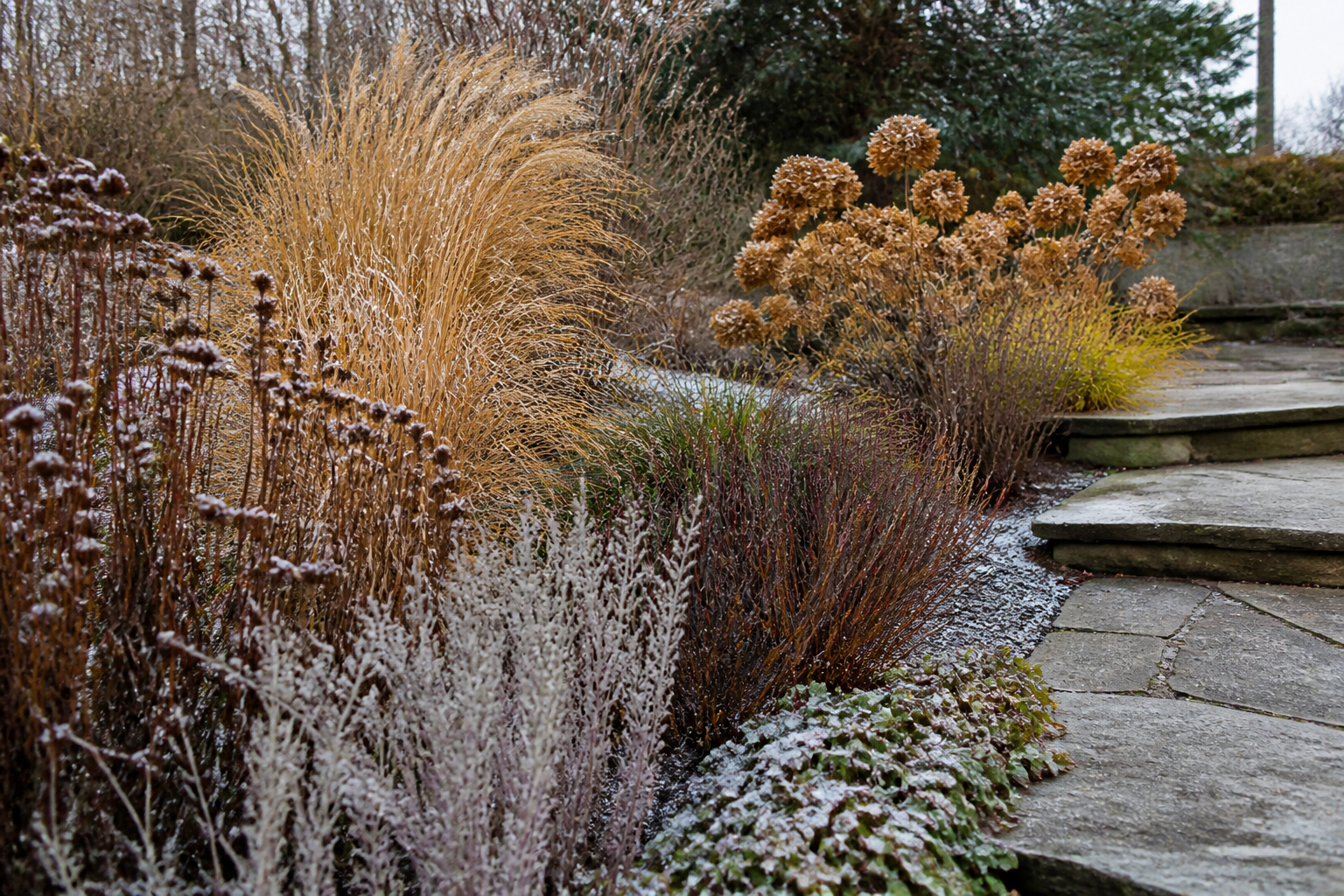
Choosing the right plants for an estate property in Southern Ontario involves more than aesthetics. For a landscape to endure and mature gracefully, it requires a palette of native and climate-appropriate species suited to our specific Zone 5b conditions. This means selecting trees, shrubs, and perennials like Serviceberry, Eastern White Cedar, and Switchgrass that are resilient, require less intervention, and contribute to the local ecology.
Understanding the 'Right Plant, Right Place' Philosophy
On a large property in Hockley Valley or King, the landscape is not a blank canvas. It is part of a larger ecological system, with its own unique soil composition, water patterns, and microclimates. The most successful and enduring garden designs are those that honour this context. This is the essence of the 'right plant, right place' philosophy—a core principle that guides every Headwaters landscape design.
This approach prioritizes plants that will thrive naturally, rather than forcing a specific look with species that will struggle. It's a strategy that yields a more resilient, lower-maintenance, and visually cohesive landscape. We balance three key categories of plants:
- Native Plants: Species that have evolved over a long period in the Southern Ontario ecosystem. They are perfectly adapted to our climate and soil and provide the highest ecological value for local wildlife and insects.
- Nativars: These are cultivars of native plants, selected by horticulturists for specific desirable traits like a more compact size, different flower colour, or enhanced disease resistance. They offer design flexibility while retaining many native characteristics.
- Climate-Appropriate Plants: These are carefully selected non-native species that originate from climates similar to ours. They are proven to be non-invasive and perform reliably in our Zone 5b conditions without excessive water or care.
Foundation First: Structural Trees and Shrubs
The 'bones' of any estate garden are its trees and shrubs. These structural plants are the first and most critical layer, responsible for creating scale, defining outdoor rooms, screening for privacy, and providing essential visual interest through the winter months. A thoughtful selection of trees and shrubs forms a permanent framework that the rest of the garden is built around.
Key Structural Trees for Zone 5b:
- Serviceberry (Amelanchier canadensis): A quintessential four-season small tree. It offers delicate white flowers in spring, edible berries for wildlife in summer, brilliant orange-red fall colour, and an elegant, sculptural form in winter.
- Eastern White Cedar (Thuja occidentalis): The workhorse of the Ontario landscape. It can be used as a formal, clipped hedge for privacy or planted in naturalistic groupings to blend a property into its woodland surroundings. Cultivars like 'Smaragd' offer a tight, narrow form.
- White Spruce (Picea glauca): A robust and beautiful native conifer that brings scale and presence to large properties. It acts as an excellent windbreak and provides critical habitat.
- Red Maple (Acer rubrum): Famous for its spectacular fall colour, the Red Maple is also a fast-growing and adaptable shade tree that tolerates a range of soil types.
Essential Shrubs for Structure and Interest:
- Red Osier Dogwood (Cornus sericea): Prized for its brilliant red stems that light up the winter landscape. It thrives in moist areas and is excellent for massing near a pond or waterfall.
- Ninebark (Physocarpus opulifolius): A tough, adaptable shrub with attractive peeling bark and foliage that comes in deep burgundy (like 'Diabolo') or bright chartreuse, providing season-long colour contrast.
- Fragrant Sumac 'Gro-Low' (Rhus aromatica): This low-growing, spreading shrub is a problem-solver, perfect for covering banks and slopes where it provides erosion control and brilliant fall colour.
The Perennial Layer: Weaving in Texture and Life
If trees and shrubs are the bones, perennials are the muscles and skin that flesh out the garden. This layer provides waves of seasonal colour, rich textures, and vital food sources for pollinators. A well-designed perennial planting feels dynamic and alive, changing from week to week throughout the growing season.
The key is to select perennials based on the specific light and soil conditions of each garden bed, something determined during our initial site assessment.
Top Performing Perennials for Sun:
- Purple Coneflower (Echinacea purpurea): A prairie native that is exceptionally drought-tolerant once established. Its long-lasting blooms are a magnet for bees and butterflies, and the seed heads provide food for goldfinches in the fall.
- Black-Eyed Susan (Rudbeckia hirta): This cheerful, classic perennial provides a burst of golden-yellow in late summer, bridging the gap into fall.
- Wild Bergamot (Monarda fistulosa): Also known as Bee Balm, its unique purple flower clusters attract hummingbirds and a wide range of native bees. It has a lovely minty fragrance.
Reliable Perennials for Shade:
- Canadian Wild Ginger (Asarum canadense): Not related to culinary ginger, this plant forms a lush, deep green groundcover in shady, moist woodland gardens. Its heart-shaped leaves are its main feature.
- Foamflower (Tiarella cordifolia): In spring, it sends up airy, white flower spikes that resemble foam. It spreads to form a beautiful, textured groundcover under deciduous trees.
- Ostrich Fern (Matteuccia struthiopteris): For adding bold, architectural texture to a shade garden, few plants rival the Ostrich Fern. Its tall, vase-shaped fronds create a dramatic, prehistoric look.
A well-designed garden performs as beautifully as it looks, supporting local ecology season after season.
The Power of Grasses: Movement, Sound, and Winter Presence
Ornamental grasses are indispensable in contemporary naturalistic design. They bridge the gap between manicured garden beds and the wilder, borrowed landscape beyond. Their fine texture provides a soft counterpoint to bold perennials and hardscapes, and their movement and sound in the wind add a sensory dimension that few other plants can.
Crucially, they offer unparalleled four-season interest. Many native grasses hold their form and colour through winter, catching snow and providing structure when perennials have died back to the ground.
Essential Grasses for the Headwaters Region:
- Switchgrass (Panicum virgatum): A tall, upright, and deeply rooted prairie grass. Cultivars like 'Northwind' are prized for their strict, vertical habit and olive-green foliage, while others offer airy plumes and rich fall colour.
- Little Bluestem (Schizachyrium scoparium): This mid-sized grass is a chameleon. Its foliage is blue-green in summer, transforming to a spectacular mix of copper, red, and orange in the fall that persists through winter.
- Pennsylvania Sedge (Carex pensylvanica): While technically a sedge, not a grass, it functions as a superb groundcover. It creates a soft, flowing, lawn-like texture in dry shade where turfgrass fails. It's an excellent low-maintenance lawn alternative for specific areas.
Integrating Plantings with Structures and Hardscapes
A planting plan does not exist in isolation. It must be woven into the property's architecture and hardscape elements to create a cohesive whole. The right plantings soften hard edges, frame views, and make built structures feel like they belong to the land.
Around an in-ground pool, we select grasses and perennials that won't drop excessive debris into the water. Low-growing, fragrant plants might line the edge of a Wiarton flagstone patio, releasing their scent as you walk by. Climbing vines can be trained up a custom pergola or pavilion to create a green ceiling.
On sloped properties, deep-rooted native plants are used to stabilize the soil above and below a natural stone retaining wall, preventing erosion and integrating the structure into the hillside. Every plant choice is a response to both the natural conditions and the designed elements of the site. This holistic approach ensures the final landscape is functional, beautiful, and deeply connected to its place.
To discuss how this approach could apply to your property, we invite you to start a project with us.
Frequently asked
Questions, answered
- How long does it take for a native garden to look 'full'?
- While some perennials fill in within the first season, a layered garden design typically takes 2-3 years to mature. We design for this evolution, and our ongoing garden maintenance services can help guide your landscape as it grows.
- Are native plants completely 'no-maintenance'?
- No, but they are significantly lower-maintenance once established. They require watering during their first year and periodic weeding and editing to maintain the design's intent, especially in a more formal composition.
- Can I have a formal-style garden using native plants?
- Absolutely. Native plants can be used in highly structured designs. Eastern White Cedar creates an excellent formal hedge, while grasses like 'Northwind' Switchgrass can be planted in geometric grids for a modern, architectural look.
- What is the best time of year to plant in Southern Ontario?
- Spring and fall are the ideal planting seasons in our Zone 5b climate. The cooler temperatures and more consistent moisture reduce transplant shock and help plants establish strong root systems before the stress of summer heat or winter cold.
- My property is in The Blue Mountains. Are the plant choices different?
- The foundational plant palette is very similar, as The Blue Mountains area is also primarily Zone 5b. However, our design team pays close attention to microclimates like increased wind exposure or different soil near the Niagara Escarpment when finalizing a planting plan for any site in our service area.
Related on the site
Start a conversation
Planning a project in the Headwaters region?
We design and build across Hockley Valley, Caledon, Mulmur, Mono, King, and The Blue Mountains. Tell us about your property and we'll take it from there.
Book a discovery call →