
process
A Process Walkthrough for Landscaping Orangeville In-Town Properties
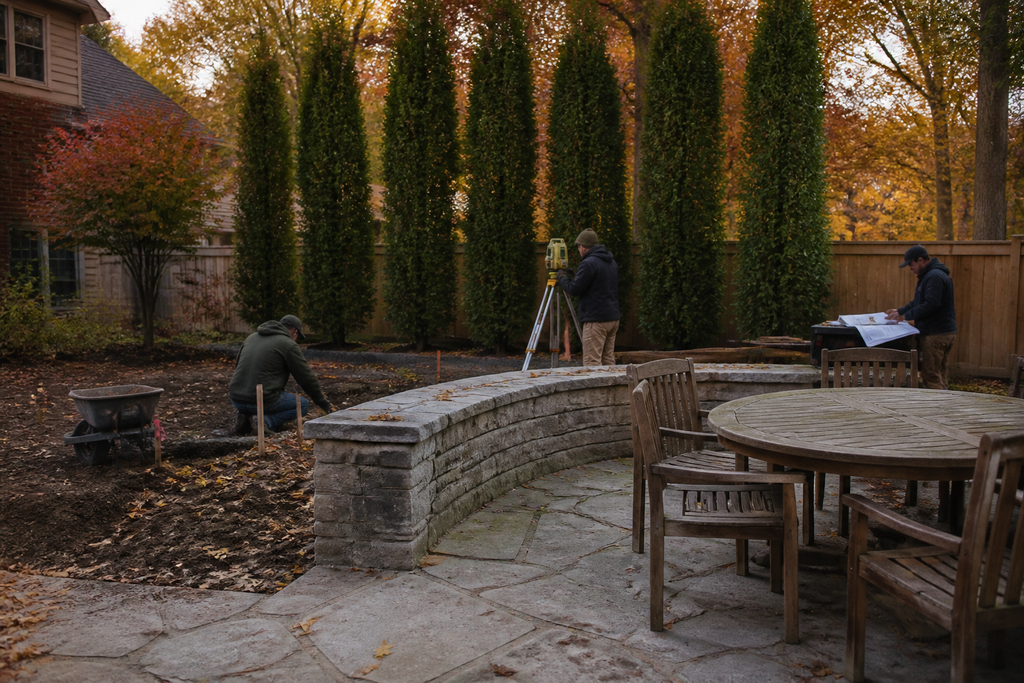
When it comes to landscaping Orangeville properties, the process requires maximizing smaller in-town footprints while managing heavy clay soils and property drainage. Success begins with a master plan focused on mature tree preservation, layered privacy planting, and properly engineered hardscapes that accommodate tight access constraints.
The Unique Character of In-Town Lots
Older neighborhoods offer incredible charm. You get established streetscapes, thick tree canopies, and a sense of history. But those same properties often come with tighter property lines and close neighbors. You want to enjoy morning coffee on the back patio without feeling like you are on display to the street.
A successful Orangeville backyard design balances generous outdoor living space with strategic visual screening. It is about creating a private retreat within a bustling neighborhood. We look at the property line as a canvas for greenery, rather than just a place to put a wooden fence.
When we review our Orangeville landscape design and construction work, the standout projects always embrace the constraints of the lot. By working with the existing architecture and respecting the mature trees, we can build a space that feels like it has always belonged there.
Assessing Soil and Drainage
When interviewing landscapers, Orangeville homeowners often ask about water pooling in their yards during the spring thaw. It is an incredibly common issue. Many local properties sit on dense clay soils that hold moisture rather than letting it drain away freely into the earth.
Before we sketch a single patio layout, we assess how water moves across your property. A proper grading plan must account for roof runoff, natural slopes, and the heavy soils beneath the surface. If we ignore the water, winter freeze-thaw cycles will eventually heave your stonework.
- Grade evaluation: Identifying low spots where water naturally collects after heavy rain.
- Soil testing: Checking the clay content to determine how much base material we need under patios.
- Runoff routing: Planning subtle swales or underground pipes to move water away from the foundation.
We often bury drainage pipes to carry downspout water away from the house and into a designated planting bed or a French drain (a gravel-filled trench that slowly disperses water). This invisible infrastructure is the most important part of the build.
Designing for Privacy on a Smaller Footprint
Right now, as the leaves drop in November, you can clearly see the sightlines into your yard from the neighboring houses. Winter reveals exactly where you need screening. But simply building a taller wooden fence can make a small yard feel like a restrictive wooden box.
Effective in-town privacy planting relies on depth rather than just height. We use a mix of structural trees, dense evergreens, and ornamental grasses to create a soft, living boundary. This approach absorbs neighborhood noise and provides visual interest through all four seasons.
| Screening Method | Best Application | Visual Impact |
|---|---|---|
| Solid Wood Fencing | Immediate privacy at the property line | Hard boundary, can feel restrictive in small spaces |
| Columnar Trees | Blocking second-story neighbor windows | Soft, vertical height without taking up ground space |
| Layered Shrubs | Creating depth and seasonal color | Lush, naturalistic feel that softens hardscapes |
We frequently use columnar oaks or tall, narrow evergreens to block specific sightlines without eating up your lawn. Lower down, we might plant serviceberry for spring flowers, surrounded by switchgrass that provides texture and movement late into the fall.
Navigating Mature Tree Preservation
Established neighborhoods are defined by their trees. A massive sugar maple or century-old elm adds immense value to your property. However, their root systems often extend far beyond the drip line (the outer edge of the branch canopy), complicating the construction process.
A beautiful new stone terrace loses its appeal if the century-old shade tree beside it dies three years later.
When it comes to landscape design, Orangeville properties require careful coordination around these root zones. Digging a deep trench for a retaining wall too close to a mature trunk can sever critical roots. We have to map these root zones early in the process to protect the canopy.
If a patio must go near a significant tree, we adjust our build methods. We might raise the grade slightly to avoid digging into the roots, or use permeable paving solutions that allow water and air to reach the soil below.
Structuring the Outdoor Living Zones
On a sprawling country estate, you can spread out your dining area, fire pit, and lounging space. On a compact in-town lot, every square foot must serve a distinct purpose. The key is creating separate zones that flow naturally into one another without feeling cluttered.
We typically start by anchoring the main dining space near the kitchen doors. This makes summer barbecues and evening meals easy to manage. From there, we might step down to a secondary lounging area, using a subtle change in elevation to define the new outdoor room.
We use natural stone to give these spaces permanence. A patio made of Wiarton flagstone provides a durable, elegant surface that warms up in the morning sun. We often border these patios with low seating walls, which define the space and provide extra room for guests.
Softening the Hardscape with Purposeful Planting
Too much uninterrupted stone can make a smaller yard feel harsh and uninviting. To prevent this, we balance our hardscapes with lush, layered garden beds. The goal is to make the stonework feel as though it was carved out of the surrounding landscape.
We select climate-appropriate species that thrive in our zone 5b winters. By grouping plants with similar water and light needs, we ensure the garden remains resilient and vibrant from the first spring thaw through the late fall frosts.
While a newly planted garden requires watering and attention during its first summer, the long-term goal is a self-sustaining environment. For clients who prefer to enjoy their gardens rather than weed them, we offer ongoing seasonal care to keep the space looking its best year-round.
The Build Phase: Access and Materials
The actual construction phase on an in-town lot requires careful logistics. We cannot simply dump ten yards of gravel on the front lawn and leave it there for a week. We bring materials in exactly when we need them, keeping the site clean and organized for you and your neighbors.
Base preparation is where the real work happens. Because of the local clay, we dig deeper than you might expect for a patio. We lay down a heavy-duty geotextile fabric to separate the wet clay from our clean gravel base, preventing the two from mixing over time.
Once the base is compacted and perfectly leveled, the stonemasons take over. They cut and fit each piece of stone by hand. The result is a solid, unyielding surface that will handle decades of intense Ontario winters without losing its structural integrity.
Planning Your Project This Fall
While the ground is cooling down this November, it is the perfect time to start planning for next year. Designing a comprehensive landscape takes time. Rushing the process in April usually means compromising on material choices or missing the summer build window entirely.
Starting your master plan now allows us to work through the design iterations at a comfortable pace. We can source the best stone, secure the healthiest plant stock, and handle any municipal permits well before the snow melts.
By the time spring arrives, your project will be fully engineered, budgeted, and ready for our crews. If you are looking at your backyard this fall and realizing it needs a new direction, reach out to start a project with our team. We can sit down, discuss your vision, and map out the process together.
Frequently asked
Questions, answered
- Do I need a permit for landscaping in Orangeville?
- How do you handle poor drainage on an in-town lot?
- What are the best trees for privacy in a small backyard?
- When should we start planning a spring landscape project?
- How do you get equipment into a narrow backyard?
Related on the site
Start a conversation
Planning a project in the Headwaters region?
We design and build across Hockley Valley, Caledon, Mulmur, Mono, King, and The Blue Mountains. Tell us about your property and we'll take it from there.
Book a discovery call →