
maintenance
The Right Time to Prune: A Spring vs. Summer Guide for Ontario Gardens
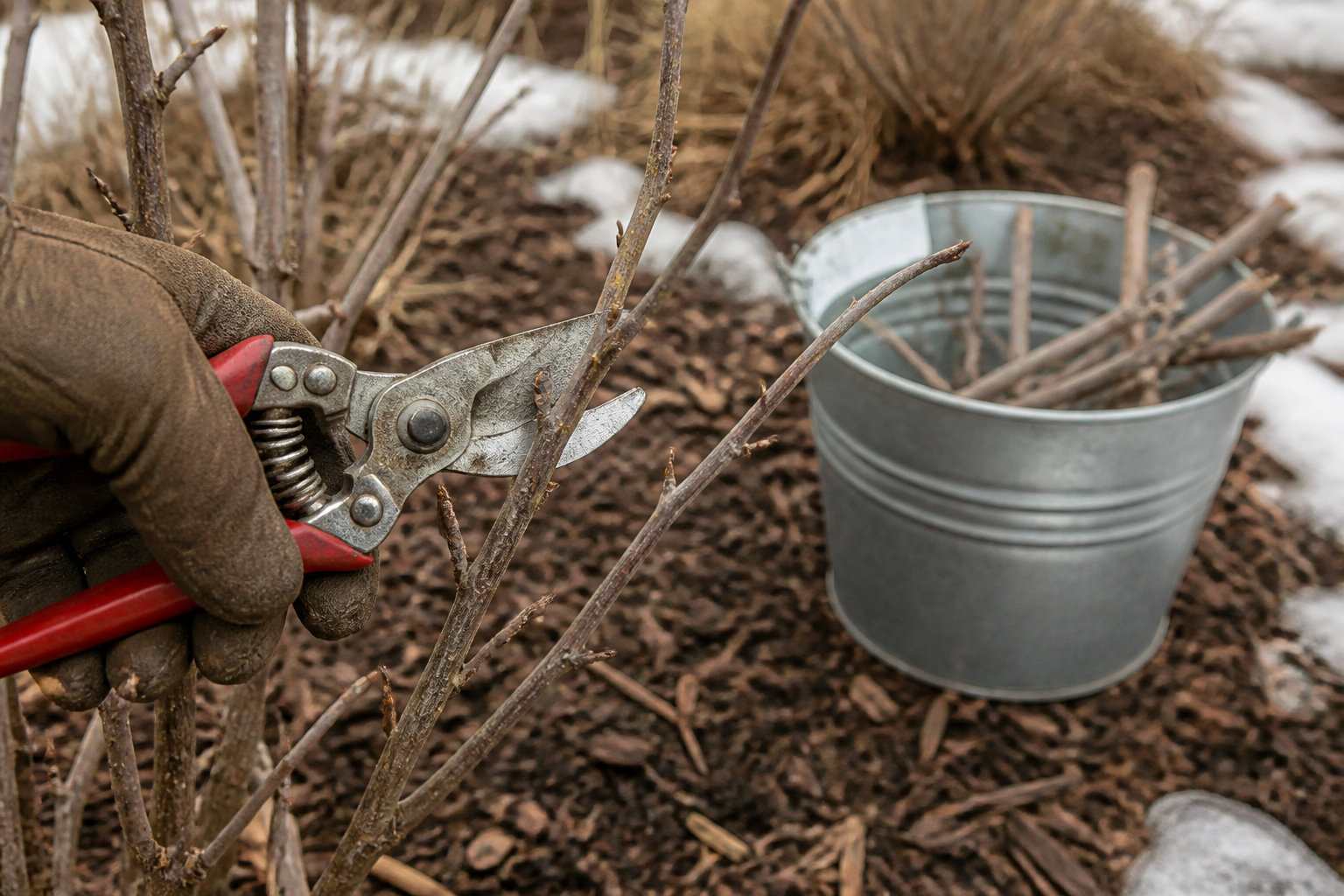
A proper pruning schedule for an Ontario garden is dictated by a plant's flowering cycle and growth habit. We prune summer-flowering shrubs in late winter or early spring to encourage new growth, while spring-flowering shrubs are pruned immediately after they bloom to avoid removing that season's flower buds.
The Foundational Rule: Pruning by Bloom Time
The most critical factor in any pruning schedule is understanding whether a shrub flowers on old wood or new wood. This distinction determines the timing of your cuts and dictates whether you'll have a profusion of blooms or a season of bare stems.
Old Wood Bloomers: These shrubs form their flower buds during the previous summer or fall on last year's branches. If you prune them in early spring, you cut off all the potential flowers for the upcoming season. The rule is simple: prune them immediately after they finish flowering. This gives the plant a full season to produce new growth that will carry next year's buds. Common examples include Lilacs, Forsythia, and many climbing roses.
New Wood Bloomers: These plants produce new growth in the spring and set their flower buds on that same year's growth. Pruning them in late winter or early spring encourages vigorous new stems, which means more flowers. This group includes popular choices like Panicle Hydrangeas (Hydrangea paniculata) and Japanese Spirea (Spiraea japonica).
What We Prune in Late Winter & Early Spring
As the snow recedes in our service area from Caledon to The Blue Mountains, our garden maintenance teams begin the critical work of spring cleanup and structural pruning. This dormant-season work sets the stage for the entire growing season.
This is the time to be decisive with shrubs that bloom on new wood. By cutting them back before they break dormancy, we stimulate strong, flower-producing growth. We also address perennials and grasses left for winter interest.
Key tasks for late winter:
Cutting back ornamental grasses: Clump-forming grasses like Switchgrass (Panicum virgatum) and Feather Reed Grass (Calamagrostis) are cut back to a few inches from the ground. * Pruning summer-flowering shrubs: Panicle Hydrangeas are often cut back by about one-third to encourage strong stems that can hold their large blooms. Potentilla and Japanese Spirea also benefit from a hard prune.
Cleaning up perennials: The remaining foliage from perennials like Coneflower (Echinacea) and Black-Eyed Susan (Rudbeckia) is cut back to the ground to make way for new growth. * Structural pruning on young trees: We make careful cuts to establish a good framework for future growth, but major tree work is left to certified arborists.
What We Leave Alone in Spring (And Prune After Flowering)
Equally important is knowing what not to touch in early spring. Pruning the wrong shrub at this time is a common mistake that sacrifices a whole season of colour. Our teams are careful to identify and bypass any shrubs that flower on old wood during the initial spring cleanup.
Good pruning is an act of guidance, not amputation.
These plants have already set their buds for the year. The only pruning they might receive in spring is the removal of any branches that are clearly dead, damaged, or diseased.
Once these spring beauties have finished their display, we perform the necessary pruning. For a Serviceberry (Amelanchier), this might mean thinning out crossing branches. For a Lilac, it involves removing spent flower heads and cutting back a few of the oldest stems to the base to encourage renewal.
Summer Pruning: A Lighter Touch for Maintenance
During the summer months, our pruning work shifts from large-scale structural cuts to ongoing refinement. This is a key part of our garden maintenance programs. The focus is on maintaining plant health, encouraging more blooms, and keeping the overall landscape design looking sharp.
Summer tasks include:
- Deadheading: This is the simple act of removing spent flowers. On perennials like Salvia and Peonies, it tidies the plant and encourages more blooms or vegetative growth. On repeat-blooming roses, it encourages subsequent flushes of flowers. 2. Corrective Pruning: We watch for and immediately remove the "three D's": dead, damaged, or diseased branches.
This can be done at any time of year and is crucial for preventing the spread of issues like fire blight or cankers. 3. Shearing Hedges: Evergreen hedges like Yew (Taxus) and Boxwood (Buxus) get their main shearing after the initial flush of growth has hardened off. This maintains their formal shape. 4.
Pinching Back: For late-season bloomers like Asters and Garden Mums, we pinch back the growing tips to encourage bushier growth. This encourages the plants to become bushier and more compact, preventing them from flopping over later in the season.
Tools of the Trade: Precision and Hygiene
Using the right tool for the job results in cleaner cuts, faster healing for the plant, and less fatigue for the gardener. Our crews carry a standard set of high-quality, well-maintained tools for all pruning work.
- Bypass Pruners: The essential hand tool for clean cuts on living stems up to approximately ¾-inch in diameter.
- Bypass Loppers: Provides more leverage for cutting branches typically between ¾-inch and 1.5 inches.
- A sharp pruning saw: Necessary for removing branches over 1.5 inches in diameter with a clean, controlled cut.
- Hedge Shears: Used for the uniform shearing of formal hedges, not for selective pruning.
- Rubbing Alcohol/Disinfectant: We clean our blades between plants, and always after cutting diseased wood, to prevent spreading pathogens.
Investing in quality tools and keeping them sharp and clean is non-negotiable for professional results. It's a core principle of stewarding the diverse native and climate-appropriate plants we install in our projects.
Frequently asked
Questions, answered
- When is the best time to book seasonal garden maintenance?
- We recommend clients start a conversation in late winter for the upcoming season or in the fall for the following year. Our comprehensive [garden maintenance](/services/garden-maintenance) schedules fill up quickly.
- How do you decide what perennials to cut back in fall vs. spring?
- We typically leave sturdy perennials with structural seed heads, like Switchgrass and Coneflower, for winter interest and wildlife value, especially in our [Caledon and Mulmur](/service-areas) projects. Soft-bodied plants like Hostas are best cut back in the fall to prevent slug issues.
- Can I prune my large, mature trees myself?
- We strongly advise hiring a certified arborist for any work on mature trees that requires climbing, chainsaws, or is near utility lines. Our expertise focuses on shrubs, perennials, and smaller ornamental trees within the landscape design.
- What's the difference between shearing and pruning?
- Shearing is the uniform trimming of a plant's outer surface, typically for formal hedges like boxwood. Pruning involves making selective cuts to individual branches to improve the plant's health, structure, and flowering.
- Do you offer one-time pruning services?
- Our pruning services are typically integrated into ongoing [garden maintenance](/services/garden-maintenance) programs for properties we've designed or installed. This ensures a consistent standard of care. We may consider one-time restorative pruning on a case-by-case basis.
Related on the site
Start a conversation
Planning a project in the Headwaters region?
We design and build across Hockley Valley, Caledon, Mulmur, Mono, King, and The Blue Mountains. Tell us about your property and we'll take it from there.
Book a discovery call →