
ponds
What to Plant Around a Pond for a Natural Look
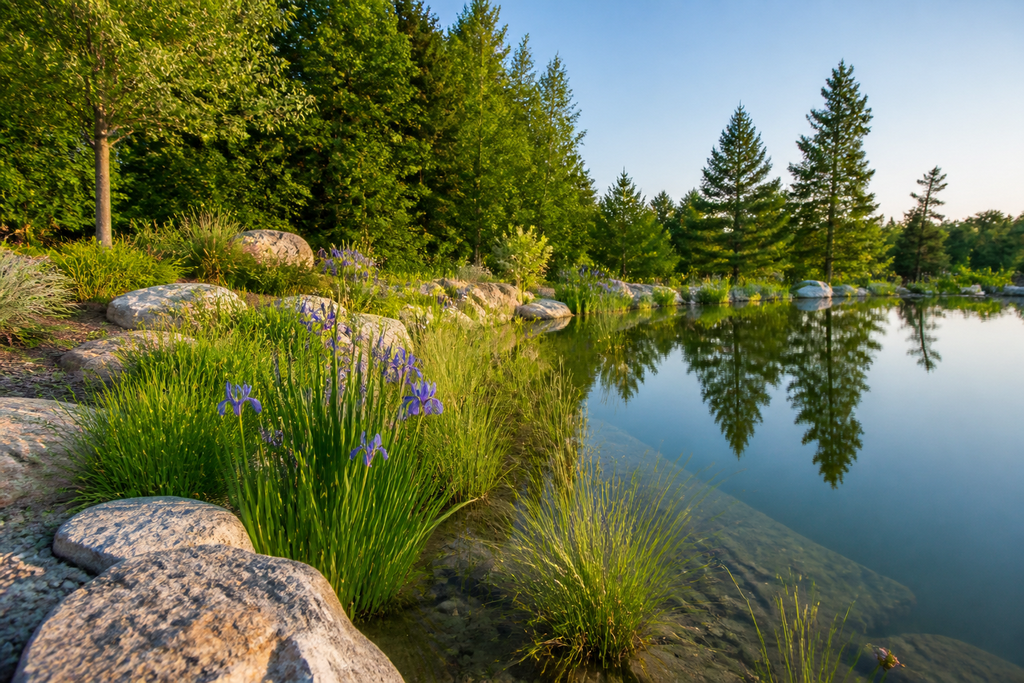
The best plants for around a pond in Ontario are hardy, moisture-loving perennials, grasses, and shrubs that seamlessly blend the water's edge with the surrounding landscape. Key choices include native species like Cardinal Flower, Blue Flag Iris, and Switchgrass, which offer seasonal interest, stabilize soil, and support local wildlife.
Imagine walking out to your property on a warm summer morning. You hear the gentle sound of a waterfall, and see dragonflies darting between the tall stalks of grass at the water's edge. The reflection of flowering perennials shimmers on the surface. This is the goal of a naturalistic pond — to create a feature that feels as if it has always been a part of your land.
The secret to achieving this isn't just the shape of the pond or the placement of the stone. It's the thoughtful selection and placement of plants that knit the water into the wider landscape.
Why Thoughtful Pond Planting Matters
Planting the margin of a pond does more than just make it look beautiful. The right plants are a critical part of a healthy, low-maintenance water feature. They create a living ecosystem that works in harmony with the design.
Here’s what a well-planned pond margin accomplishes:
- Softens Edges: Plants gracefully hide the liner and soften the hard lines of the surrounding natural stone, making the transition from land to water feel completely organic.
- Stabilizes Soil: The root systems of marginal plants are powerful. They form a dense web that holds soil and gravel in place, preventing erosion at the water's edge.
- Creates Habitat: Native plants provide essential food and shelter for pollinators, birds, dragonflies, and frogs, turning your pond into a hub of biodiversity.
- Improves Water Quality: Plants in the marginal zone can help absorb excess nutrients from runoff, acting as a natural filter before water enters the pond.
- Adds Four-Season Interest: A well-designed plant palette provides beauty throughout the year, from the first shoots of Marsh Marigold in spring to the brilliant red stems of Red Osier Dogwood against winter snow.
Understanding the Planting Zones of a Pond
Not all pond plants want the same conditions. To create a successful and sustainable planting, we design with three distinct zones in mind, each defined by its relationship to the water level. This is a fundamental part of our landscape design process for any water feature.
| Planting Zone | Description |
|---|---|
| Marginal Zone | These plants like “wet feet.” Their roots are in shallow water, typically 0-15 cm deep, right at the pond’s edge. They are essential for softening the look of the liner and stone. |
| Bog Zone | This is the consistently damp soil just above the water line. The soil is saturated but not submerged. Many of the most colourful pond-side perennials thrive here. |
| Transitional Zone | This area has average to moist soil and connects the immediate pond environment to the rest of your garden. These plants frame the view and provide a backdrop. |
Our Go-To Plants for a Naturalistic Ontario Pond
Over our many years of building ponds in this region, we've developed a palette of reliable, beautiful, and ecologically valuable plants. We prioritize native species that are adapted to our climate. Here are a few of our favourites.
Perennials for Colour and Texture
- Cardinal Flower (Lobelia cardinalis): Unforgettable spikes of brilliant red flowers from mid to late summer that are a magnet for hummingbirds. Thrives in the bog zone.
- Blue Flag Iris (Iris versicolor): A classic marginal plant with striking blue-purple flowers in early to mid-summer. Its sword-like leaves provide vertical structure all season.
- Joe Pye Weed (Eutrochium maculatum): A tall, stately perennial with large domes of mauve flowers from mid to late summer, attracting countless butterflies. Perfect for the back of a boggy border.
- Marsh Marigold (Caltha palustris): One of the first signs of spring, with cheerful, bright yellow flowers. A low-growing plant for the marginal zone.
Grasses and Sedges for Movement and Structure
- Switchgrass (Panicum virgatum): A tall, upright ornamental grass that provides a soft, airy texture. It offers great fall colour and winter interest, and its sound in the breeze is wonderful.
- Tussock Sedge (Carex stricta): Forms dense, low mounds of fine-textured foliage. It's an excellent soil stabilizer for the marginal zone and provides cover for small creatures.
- Prairie Cordgrass (Spartina pectinata): A tough, adaptable grass with long, arching leaves that have a graceful, flowing habit. Excellent for larger ponds and erosion control.
The best pond planting makes the stonework look like it emerged from the landscape, not the other way around.
Planting Around a Waterfall or Stream
Moving water creates a unique microclimate. The area around a waterfall is often characterized by high humidity, splashing water, and rocky crevices. This is an opportunity to use plants that thrive in these specific conditions and enhance the sensory experience.
For these areas, we love using:
- Ferns: Species like Ostrich Fern and Maidenhair Fern love the shady, moist environment often found at the base of a waterfall. Their delicate texture is a perfect contrast to rugged stonework.
- Mosses: We encourage moss to grow between the stones of a waterfall. It instantly ages the feature and makes it feel established. We can even transplant moss to get the process started.
- Creeping Jenny (Lysimachia nummularia): A low-growing groundcover with bright chartreuse leaves that will trail over rocks and down to the water’s edge.
By carefully selecting plants, we can amplify the character of the water feature. The rustle of grasses next to a stream, for example, adds another layer to the acoustic ambiance of the design.
Caring for Your Pond-Side Garden
Once your pond plants are installed, they are generally low-maintenance. However, a little seasonal care will ensure they thrive and look their best for years to come. This is a key part of our ongoing garden maintenance programs.
- First Year Watering: Even moisture-loving plants need help getting established. Ensure the soil in the bog and transitional zones stays consistently moist for the first full season.
- Weeding: Be diligent about weeding, especially during establishment. This gives your desired plants a chance to fill in without competition.
- Fall/Spring Cut-Back: Cut back dead perennial and grass foliage either in late fall or early spring. Leaving them up for winter provides habitat and visual interest.
- Editing and Dividing: Periodically, some vigorous perennials may need to be divided. This rejuvenates the plant and gives you more to expand the planting.
A naturalistic pond is a dynamic, living part of your property. Watching it evolve throughout the year—from the first blooms of spring to the final seed heads of fall—is one of the great rewards of investing in a well-designed landscape. If you're ready to create a waterside oasis on your property, our team is here to help you start a project.
Frequently asked
Questions, answered
- How long does it take for pond plants to look established?
- Many perennials and grasses will look full and mature within two seasons. Shrubs and larger structural plants typically take 3-5 years to reach their full potential. Part of the joy is watching the ecosystem evolve.
- Do I need a special liner for a planted pond?
- Yes, we use a high-grade 45-mil EPDM rubber liner. The key is how it's installed—we build in special soil-filled shelves and use strategic stone placement to completely conceal the liner and create ideal conditions for marginal plants.
- What plants should I absolutely avoid around a pond in Ontario?
- We strongly advise against aggressive invasive species like Phragmites (Common Reed) and Purple Loosestrife. Our planting plans exclusively use non-invasive, native, or well-behaved climate-appropriate plants to protect your property and local ecosystems.
- Can you add plants to my existing, un-planted pond?
- Absolutely. We can often retrofit an existing pond by carefully adding planting shelves or integrating stone planting pockets along the edge. This is a great way to naturalize an older water feature.
- How do you handle permits for building a pond?
- Our team has extensive experience navigating the permit process with local conservation authorities and municipalities. Pond construction, especially near existing watercourses or on properties with environmental overlays, often requires detailed plans and approvals, which we manage as part of the project.
Related on the site
Start a conversation
Planning a project in the Headwaters region?
We design and build across Hockley Valley, Caledon, Mulmur, Mono, King, and The Blue Mountains. Tell us about your property and we'll take it from there.
Book a discovery call →