
ponds
The Sound of Serenity: Designing Water Features for Acoustic Ambiance
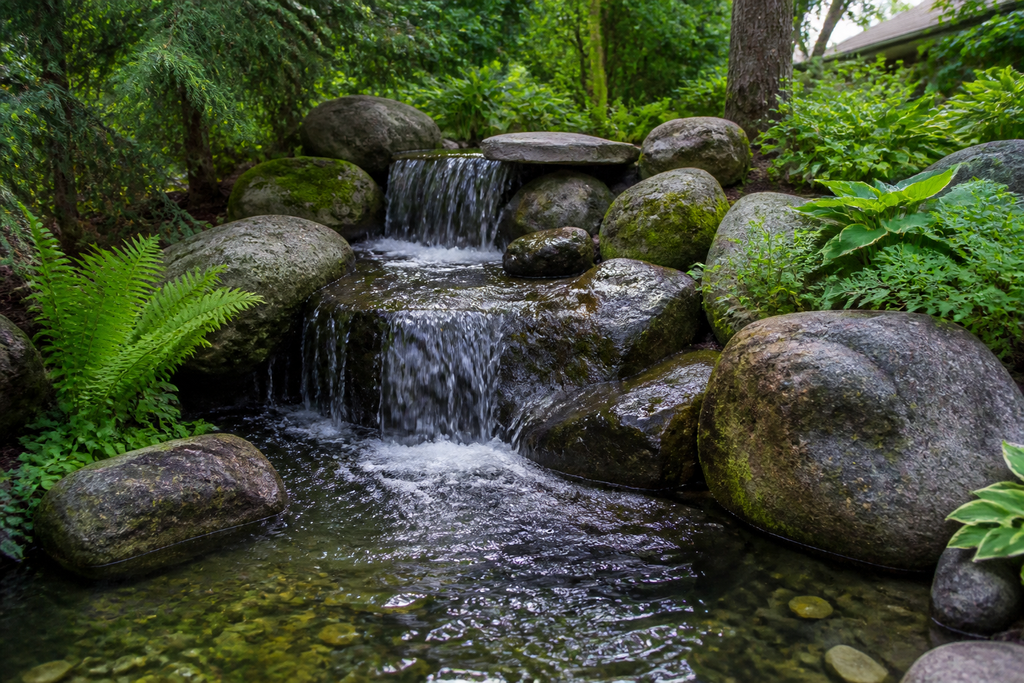
The sound of a backyard waterfall is shaped by three key factors: the volume of water, the height of the drop, and the texture of the surfaces it hits. A high, narrow fall creates a loud splash, perfect for masking noise. A gentle flow over wide, rough stones produces a soft, broad whisper ideal for quiet contemplation.
More Than a View: The Auditory Landscape
Imagine stepping onto your stone terrace on a warm summer morning. Before the world fully wakes, the only sound you hear is the gentle cascade of water over rock. It’s a sound that doesn’t demand attention but subtly reshapes the space around it, washing away the distant hum of traffic and creating a sense of private refuge. This is the power of acoustic design in the landscape.
A water feature is more than a visual centerpiece; it’s an auditory tool. The right backyard waterfall sounds can make a property feel more secluded and peaceful. It’s a living soundscape that changes with the seasons and offers a constant, calming presence. For us, designing a pond or waterfall is as much about composing with sound as it is about shaping stone and water.
The Physics of a Perfect Splash: How We Shape Water's Voice
Creating the perfect sound is a deliberate process, not an accident. We manipulate a few key variables to dial in the exact acoustic character you’re looking for, whether it’s a lively splash or a meditative murmur. It’s a craft that blends physics with artistry.
Here are the core elements we control:
- Volume: The amount of water moving through the system dictates the sound's power. A low flow rate results in a gentle, trickling sound suitable for an intimate courtyard. A high flow rate produces a powerful cascade with a broad sound spectrum that can effectively mask unwanted background noise.
- Drop: The height and angle of the fall have the most dramatic impact. A short drop onto pebbles creates a soft gurgle. A taller drop onto a flat stone slab produces a sharp, loud splash. Multiple, shorter drops over a series of ledges create a complex, layered sound.
- Texture: The surface the water strikes is crucial. Water falling on smooth, polished granite will sound very different from water splashing onto a bed of jagged river rock. Rougher, more irregular surfaces break up the flow, creating a softer, more complex sound often described as “white noise.”
Types of Water Features and Their Signature Sounds
Different designs produce distinct sounds, each suited to a different purpose and aesthetic. The choice depends on your property, your lifestyle, and the specific ambiance you want to create. From grand, naturalistic displays to subtle, modern accents, there is a form for every landscape.
| Feature Type | Acoustic Profile |
|---|---|
| Naturalistic Waterfall | Complex and broad. Water cascades over large, irregular boulders and tiered ledges, creating a rich, full-bodied sound that mimics a forest stream. Excellent for masking noise and creating a natural feel. |
| Pondless Waterfall | Focused and clean. The sound is purely from the cascade, as the water disappears into a gravel bed below. This design offers a strong acoustic presence without the maintenance or safety considerations of an open pond. |
| Sheer Descent / Scupper | Modern and uniform. A smooth sheet of water drops from a formal wall into a basin. The sound is a clear, continuous curtain of water—a crisp, architectural note rather than a naturalistic babble. |
| Bubbling Rock or Urn | Subtle and intimate. Water gently bubbles up from the center of a boulder or decorative urn and flows over its sides. This produces a soft, gurgling sound ideal for small patios, entryways, or quiet garden corners. |
Material Matters: The Stone That Sings
The choice of stone is fundamental to both the look and the sound of a waterfall. We primarily work with durable, locally sourced natural stone that harmonizes with the regional landscape. Each type of stone lends its own voice to the water that runs over it.
- Weathered granite boulders: These large, rounded stones create deep, resonant tones. Water flowing over their massive forms produces a powerful, low-frequency sound that feels ancient and grounded.
- Wiarton limestone ledges: When we build with stacked limestone, we create a series of flat shelves. Water falling from one ledge to the next produces a series of distinct, crisp splashes—a more articulate and rhythmic sound.
- River Rock & Pebbles: Used at the base of a fall or in a stream bed, these smaller, varied stones create a gentle, high-frequency hiss or babble as water tumbles over them. They add a layer of soft, textural sound to the overall composition.
Our expertise in natural stone allows us to select and place each boulder and ledge to achieve a specific acoustic goal, ensuring the final result is as beautiful to hear as it is to see.
The goal is not just to add a feature, but to subtract the noise that pulls you out of the moment.
Strategic Placement: Directing the Soundscape
Where you place your water feature is just as important as how it’s built. The goal is to direct the sound where you want it most. A poorly placed waterfall can be an annoyance, while a thoughtfully positioned one can redefine how you experience your property.
We consider several factors during the design phase:
- Proximity to Outdoor Living Areas: Placing a waterfall near a patio or deck creates a “cone of silence,” making conversation easier and masking sounds from neighbours or distant roads.
- Views from Indoors: We often site water features so they are visible and audible from a key kitchen window, home office, or great room, bringing the landscape's calming influence inside.
- Masking Unwanted Noise: A waterfall with a broad sound spectrum can be positioned to effectively block noise from a nearby road, pool equipment, or air conditioning units.
- Bedroom Proximity: For most people, the sound of water is relaxing. But for light sleepers, a loud waterfall near a bedroom window can be disruptive. We tailor the volume and placement accordingly.
Integrating Sound Into Your Landscape Master Plan
A water feature should never feel like an afterthought. It is a dynamic element that must be woven into the fabric of your entire property. In our landscape design process, we consider how the sound, movement, and form of a waterfall will interact with all other aspects of the landscape.
This holistic approach ensures every element works in concert. Plantings like Japanese forest grass, ferns, and moisture-loving perennials soften the stone edges and engage the senses. Subtle landscape lighting can transform the feature at night, highlighting the texture of the rock and the shimmer of moving water. For more details on this integrated approach, see our guide to designing a naturalistic pond.
Ultimately, a water feature is a key component of a complete landscape master plan. It’s an investment in the sensory experience of your home—a way to create a lasting atmosphere of calm and serenity.
If you’re ready to explore how the sound of water can enhance your property, we invite you to start a conversation with our team.
Frequently asked
Questions, answered
- How much noise can a backyard waterfall really mask?
- A well-designed waterfall with significant volume and drop height can produce 'white noise' that effectively masks low-to-moderate background sounds like distant traffic or neighbourly chatter. It creates a focused zone of tranquility, especially near a patio.
- What's the difference between a pondless waterfall and a regular one?
- A traditional waterfall flows into an open pond. A pondless waterfall spills into a gravel-filled reservoir hidden underground, where the water is recirculated. This provides the sound and beauty of a cascade with less maintenance and enhanced safety.
- How much maintenance does a backyard waterfall require?
- Maintenance is fairly minimal, especially for pondless systems. It typically involves occasionally adding water to compensate for evaporation, removing debris from the pump intake, and a professional shutdown in the fall and startup in the spring.
- Can I have a waterfall if my property is flat?
- Absolutely. We are experts at grading and earth-moving. Our team can build up a natural-looking berm or integrate the waterfall into a raised patio or retaining wall, creating the necessary elevation on nearly any site.
- How long does it take to build a natural stone water feature?
- The timeline varies with complexity, but a typical natural stone waterfall and stream built by our masons can take several weeks as part of a larger landscape construction project. This allows for proper excavation, liner installation, and artistic placement of each boulder.
- What kind of sound is best for a small patio vs. a large property?
- For a small, intimate patio, a gentle bubbling rock or a small cascade with a soft, gurgling sound is ideal. For a large estate property aiming to mask noise, a larger waterfall with multiple drops and significant water flow over weathered granite boulders creates a more powerful, immersive soundscape.
Related on the site
Start a conversation
Planning a project in the Headwaters region?
We design and build across Hockley Valley, Caledon, Mulmur, Mono, King, and The Blue Mountains. Tell us about your property and we'll take it from there.
Book a discovery call →