
ponds
Designing a Naturalistic Pond for the Ontario Landscape
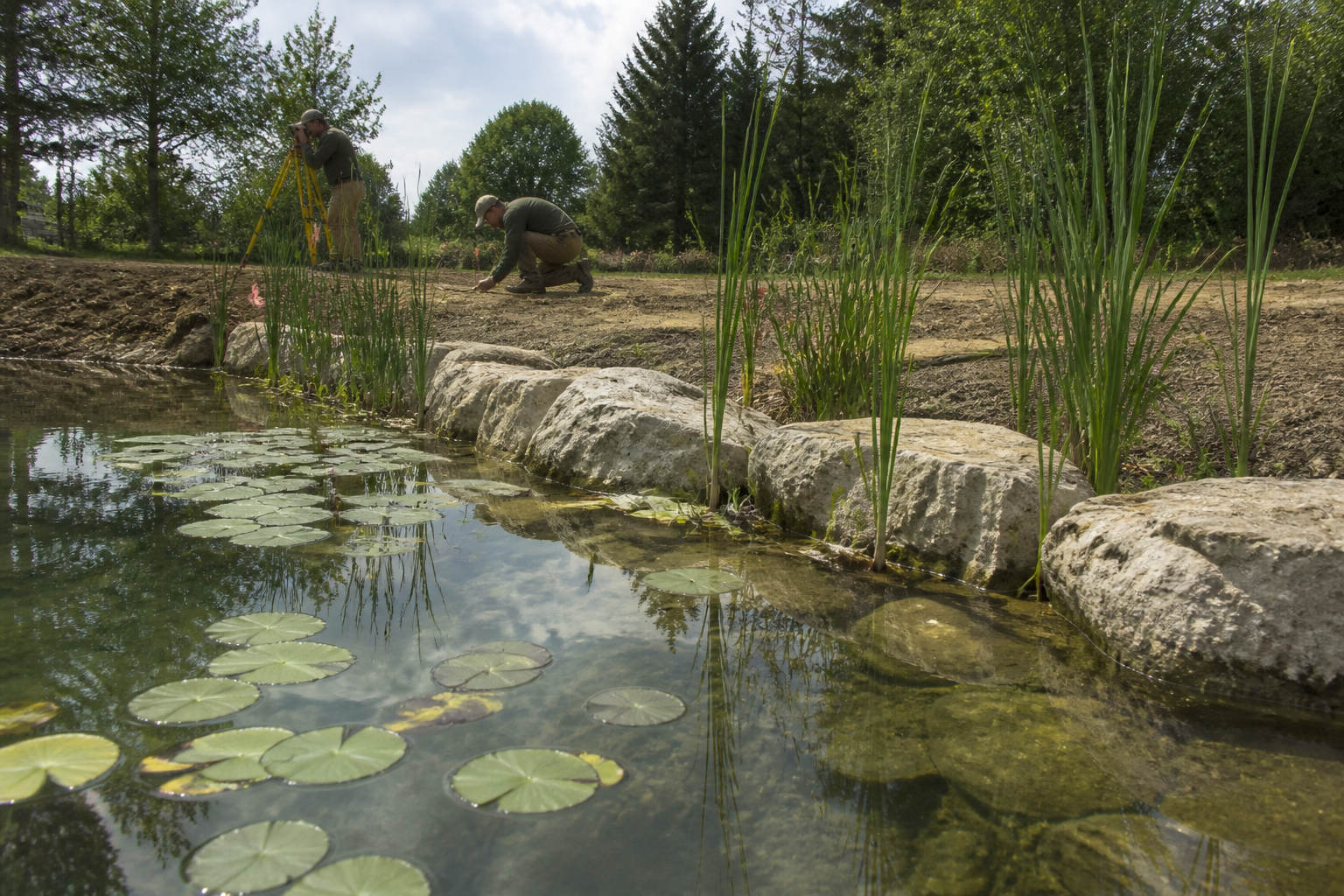
A naturalistic pond is designed to look as if it has always been part of your property. Rather than a formal, geometric feature, it uses irregular shapes, local stone, and native plants to create a balanced ecosystem that blends seamlessly into the Southern Ontario landscape, attracting wildlife and providing year-round interest.
Beyond the Blue Box: What Makes a Pond "Naturalistic"?
Imagine walking out onto your patio with your morning coffee and hearing the gentle sound of water spilling over stone. You see dragonflies skimming the surface and the reflection of tall grasses swaying at the water’s edge. This is the experience a naturalistic water feature delivers. It’s a world away from a bright blue swimming pool or a formal, symmetrical fountain.
The goal is to create something that feels discovered, not built. We achieve this by avoiding hard lines and perfect circles. Instead, we design gentle curves and an irregular shoreline that follows the contours of your land. The edges are softened with carefully placed boulders and marginal plants, completely hiding the underlying liner and creating a seamless transition from water to garden.
Reading the Land: Finding the Perfect Spot
Where a pond sits is just as important as how it’s built. The right location makes it a feature you’ll enjoy every day, while the wrong one can create practical headaches. Our process always begins with a thorough site assessment, where we walk the property with you to understand its unique character.
We consider a few key factors:
- Views: Where will you see the pond from most? We consider sightlines from the kitchen window, the main living area, and primary outdoor seating spaces.
- Topography: A gentle slope is an opportunity. We can use the natural grade to create a subtle waterfall or a meandering stream that feeds into the main pond, adding movement and sound.
- Sunlight: Too much direct sun can encourage algae, while too much shade limits the plants you can use. A spot with morning sun and some afternoon shade is often the sweet spot.
- Practicality: We plan for access for small machinery during construction and ensure the pond isn't directly under deciduous trees that will drop a heavy load of leaves each fall.
The Building Blocks: Stone, Liners, and Water Flow
A natural pond is a carefully constructed system designed to look effortless. It’s built from a few key components, each chosen for durability and its ability to support a living ecosystem.
The unseen foundation is a high-quality EPDM rubber liner, protected from punctures by a heavy-duty geotextile underlayment. But the real star is the stone. We exclusively use natural stone, often sourcing weathered limestone or granite fieldstone from local sources like the Headwaters region. This ensures the pond’s edge matches the geology of your property.
We build underwater shelves at different depths:
- Marginal Shelves (6-12 inches deep): For bog and marginal plants that like wet roots.
- Lily Ledges (18-30 inches deep): For water lilies and other deeper-water plants.
- Fish Pockets (36+ inches deep): Provides a deeper zone for fish to overwinter safely below the ice.
Water is kept clean and clear not by chemicals, but by circulation and natural filtration. A skimmer pulls leaves and debris from the surface, while a biological filter (often a BioFalls waterfall) uses beneficial bacteria on stones and filter mats to break down waste. This creates a healthy environment for plants and fish.
Natural Pond vs. Koi Pond: Choosing Your Approach
While both are beautiful, a natural pond and a dedicated koi pond have different goals and requirements. A natural pond is about creating a balanced slice of nature, while a koi pond is primarily designed to showcase specific, often valuable, fish.
| Naturalistic Pond | Dedicated Koi Pond |
|---|---|
| **Goal:** A balanced, self-sustaining ecosystem that mimics a native pond. | **Goal:** To provide the perfect environment for viewing and raising healthy koi. |
| **Fish:** Native minnows, sticklebacks, or no fish at all. Wildlife (frogs, dragonflies) are the main event. | **Fish:** Specifically koi, which have unique needs for water quality, depth, and diet. |
| **Filtration:** Balanced system of skimmers, biological waterfall filters, and aquatic plants. | **Filtration:** Often requires more robust systems, including bottom drains and UV clarifiers. |
| **Plants:** Heavily planted with a wide variety of submerged, floating, and marginal species. | **Plants:** Can be challenging, as large koi are known to eat or uproot many plant species. |
| **Depth:** Variable depths, often with a minimum of 3 feet for overwintering. | **Depth:** Typically requires a greater minimum depth (4+ feet) and steeper sides. |
Planting for a Living Ecosystem
Plants are the lungs and kidneys of a natural pond. They provide oxygen, filter nutrients from the water, and offer food and shelter for wildlife. A well-considered planting plan is what transforms a water-filled hole into a vibrant, living feature.
The most beautiful features of a natural pond are the ones you didn't install.
We select plants that are hardy to our local climate and arrange them to create a natural look. This includes a mix of species for different functions and locations within the pond.
- **Submerged Oxygenators:** Plants like Hornwort and Anacharis live entirely underwater, absorbing nutrients and releasing oxygen.
- **Floating Plants:** Water lilies are the classic choice, providing shade that helps cool the water and limit algae. Their pads also give frogs a place to rest.
- **Marginal Plants:** These are planted on the shallow shelves. We use **native species like Blue Flag Iris**, Pickerel Rush, and Marsh Marigold for colour and texture.
- **Transition Plants:** Just as important are the plants around the pond's edge. We use moisture-loving perennials like ferns and **grasses like Prairie Dropseed** to soften the stone border and connect the pond to the rest of the garden.
From Construction to Living Water
Once the last stone is placed and the pumps are running, the journey is just beginning. We fill the pond and, if using municipal water, add a dechlorinator to make it safe for life. The system needs a few weeks to "cycle," allowing beneficial bacteria to colonize the rocks and filter media. This is a crucial step before introducing fish.
For a truly natural pond in Ontario, we recommend small, hardy native fish like Fathead Minnows. They are excellent at controlling mosquito larvae and add gentle movement without the high demands of koi. Soon enough, you won't be the only one enjoying the new feature. Frogs will find their way to the water, dragonflies will begin to patrol the edges, and birds will visit for a drink.
This living element is the ultimate reward of a naturalistic pond design. It’s a dynamic, ever-changing feature that brings the rhythm of nature right to your back door. For guidance on keeping it healthy through the seasons, see our seasonal pond maintenance guide.
If you're dreaming of adding the sight and sound of water to your property, we'd love to help you plan a feature that feels like it belongs. Start a conversation with our design team to explore the possibilities.
Frequently asked
Questions, answered
- How long does it take to build a naturalistic pond?
- The timeline varies with size and complexity, but a typical residential pond project, from excavation to final planting, often takes several weeks. This does not include the initial design and planning phase.
- Can I have a pond on my sloped property in the Headwaters region?
- Absolutely. A sloped property is a fantastic opportunity for creating natural-looking waterfalls and streams that flow into the pond. Our expertise in stonework and grading is essential for making these features look authentic and function properly on the hills of Caledon or Mulmur.
- What kind of maintenance does a natural pond require?
- Once established, a balanced pond is surprisingly low-maintenance. It involves emptying the skimmer basket, occasionally thinning plants, and a proper fall shutdown and spring start-up, which our garden maintenance teams can manage for you.
- Do I need a permit for a backyard pond in Ontario?
- For most small- to medium-sized decorative ponds, a permit is not required. However, rules can vary by municipality, especially concerning setbacks from property lines or proximity to conservation areas. We handle the due diligence during the landscape design phase.
- Will a backyard pond attract mosquitoes?
- A well-designed pond with moving water from a waterfall and fish that eat larvae will have far fewer mosquitoes than a stagnant birdbath or puddle. The key is creating a healthy ecosystem where mosquito larvae cannot thrive.
Related on the site
Start a conversation
Planning a project in the Headwaters region?
We design and build across Hockley Valley, Caledon, Mulmur, Mono, King, and The Blue Mountains. Tell us about your property and we'll take it from there.
Book a discovery call →