
ponds
Pond & Waterfall Maintenance: A Seasonal Guide for Ontario Landscapes
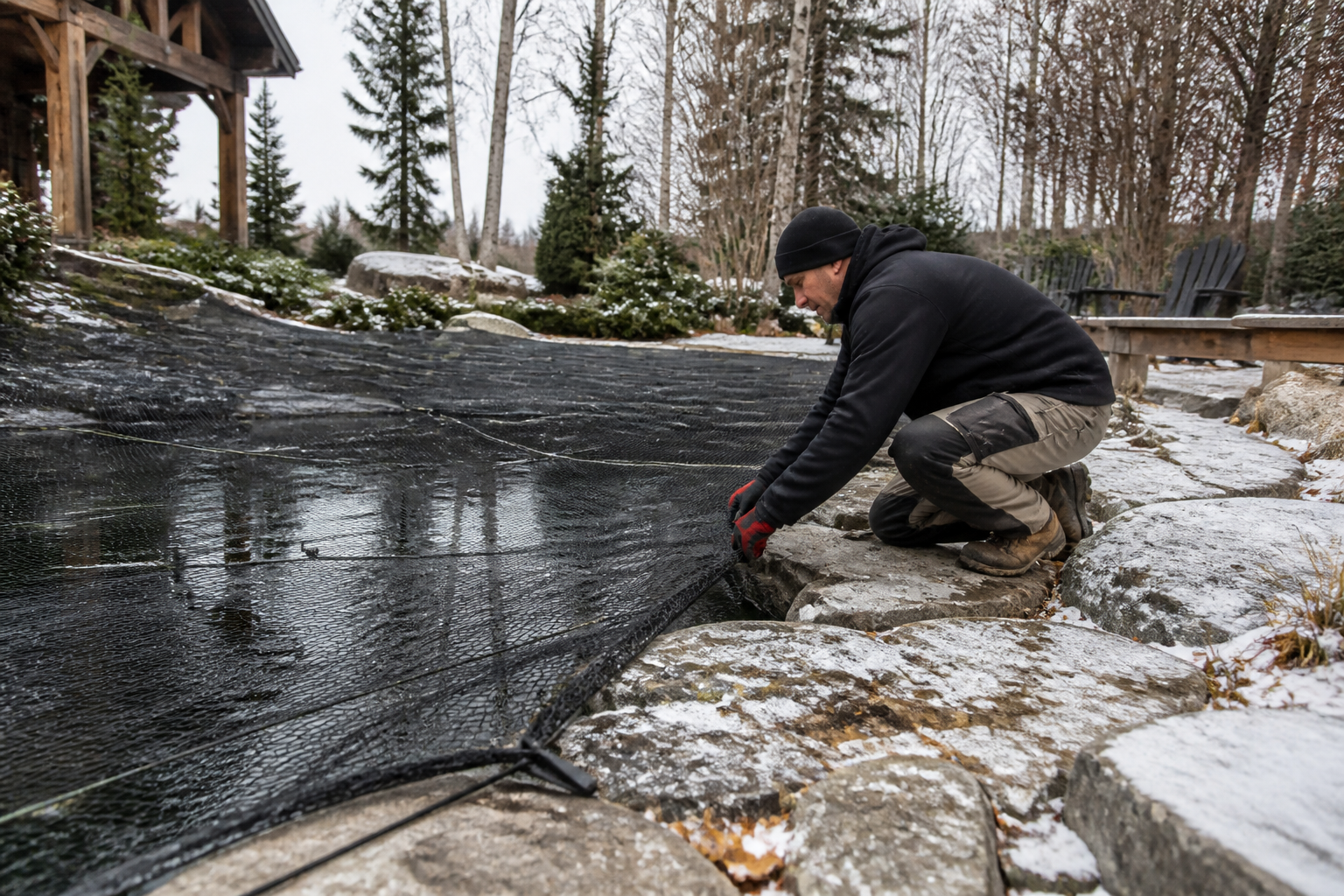
Effective pond maintenance in Ontario follows a seasonal rhythm. Summer involves managing water levels, algae, and plant health. Fall requires preparing for freezing with leaf netting and pump decisions. Winter focuses on aeration for fish survival and ice management. Spring is for a thorough clean-out, pump recommissioning, and re-establishing the pond's ecosystem.
Summer Care: Managing a Living System (Current Season)
Summer is the season when your water feature is most active. With long days and warm temperatures, biological processes accelerate—both the good and the bad. Your maintenance focus right now should be on balance and observation.
Water levels are a primary concern. Evaporation can significantly lower your pond's water level during warm, dry periods. Regularly top up the water, ideally with dechlorinated water to protect fish and beneficial bacteria. An auto-fill valve, installed during construction, automates this task.
Algae is another summer reality. A small amount is normal, but excessive blooms indicate an imbalance of nutrients. Here’s how to manage it:
- Manual Removal: Physically remove string algae with a rake or brush. This provides immediate cosmetic improvement and removes trapped nutrients.
- Beneficial Bacteria: Add beneficial bacteria according to product instructions, which may be weekly or bi-weekly depending on the product and pond conditions. These microorganisms consume excess nutrients that would otherwise feed algae.
- Aquatic Plants: Ensure you have adequate plant coverage (a significant portion of the surface, typically over half). Water lilies and other floating plants provide shade, cooling the water and starving algae of light.
- Filtration: Check and clean your skimmer basket and filter mats regularly. A clogged filter can’t do its job, leading to murky water and stressed equipment.
Planning for Fall Shutdown
While we are currently enjoying summer, the work we do in autumn is critical for a healthy pond next spring. Planning for it now ensures you have the right equipment and a service booking if needed. As leaves begin to turn, your focus will shift from growth management to preparation for dormancy.
Debris management is the top priority. Decaying leaves and organic matter release nutrients that fuel spring algae blooms and create a toxic sludge layer. The single most effective tool for this is pond netting. Install netting over the entire pond surface before the majority of leaves fall. Secure it tightly so leaves stay on top for easy removal, rather than sagging into the water.
This is also the time to care for aquatic plants. Trim back yellowing foliage on marginal plants like cattails and irises to prevent them from decomposing in the water. Tropical plants must be brought indoors. Hardy lilies can be lowered to the deepest part of the pond.
Finally, you'll need a plan for your pump and plumbing. For most ponds in our service area of Caledon and Mulmur, pumps should generally be removed to prevent ice damage. This involves disconnecting the pump, draining it completely, and storing it in a frost-free location (like a bucket of water in the garage) to keep the seals moist.
Winterization: Protecting Your Investment from the Freeze
Winter pond maintenance in Ontario is not about activity, but protection. The goal is to ensure the survival of your pond's structure and any fish within it. This plan should be finalized in the fall, well before the first hard frost.
For ponds with fish, maintaining a hole in the ice for gas exchange is non-negotiable. As organic matter decays, it produces harmful gases that must escape. A frozen-over surface traps these gases, which can be fatal to fish. There are two primary methods for this:
- Pond Aerator: This is our preferred method. An aerator sits at the bottom of the pond and releases bubbles, circulating warmer water from the depths to the surface to keep a small area ice-free.
- Floating De-Icer: This device uses a heating element to maintain a small hole in the ice. It's an effective, low-energy solution but must be placed away from the pond edges to avoid damaging the liner.
For the structure itself, proper shutdown is key. All plumbing lines must be drained or blown out with compressed air to prevent cracking. The waterfall weir and skimmer box should be protected. Our professional garden maintenance teams handle this process for many of our clients, ensuring it's done correctly.
A well-built pond is a living system, not a static feature; its needs change with the seasons.
Spring Startup: Commissioning for the Year Ahead
Come spring, it's time to reverse the winterization process and wake the pond up. The extent of the work depends on the condition of the pond after winter. Some require a full drain and clean, while others may only need a partial clean-out. This is a critical step in setting the stage for a healthy summer.
Our spring commissioning service follows a detailed checklist to ensure nothing is missed:
- Drain & Clean: If necessary, the pond is carefully drained, fish are moved to holding tanks, and the entire basin is power washed to remove sludge and debris.
- System Inspection: We inspect the EPDM liner for damage, check all plumbing connections, and examine the pump and filtration equipment for wear.
- Pump Re-installation: The pump is brought out of storage, reconnected, and tested. Filter media is cleaned or replaced.
- Refill & Treatment: The pond is refilled. We add a dechlorinator to protect fish and then a dose of beneficial bacteria to kick-start the biological filter.
- Re-introduction: Plants are returned to their shelves, and fish are slowly acclimated back into the fresh water.
This is often the most intensive maintenance task of the year. For new pond owners, having a professional team handle the first few spring startups can be an invaluable learning experience. It's a service we provide to many clients who have had ponds and waterfalls designed and built by Headwaters.
Designing for Lower Maintenance
While this guide focuses on seasonal tasks, it's important to note that maintenance truly begins at the design stage. The decisions made during the initial landscape design process have a profound impact on how much work your pond will require.
Factors like pond depth, circulation, and filtration are paramount. A pond that is too shallow will warm up quickly, promoting algae. A system with an undersized pump or filter will constantly struggle with water clarity. The relationship between the pond's volume and the capacity of its skimmer and biological filter (like a BioFalls filter) is a science.
Getting it right is fundamental to our design process, and it's a key part of how we approach Reading the Land: Our Site Assessment for Landscape Design.
The choice of materials for the surrounding hardscape also plays a role. A patio of natural flagstone or other solid paving materials provides a stable, clean edge, whereas loose mulch can easily wash into the pond, adding to the nutrient load. Even the placement of the pond—away from heavily shedding deciduous trees—can drastically reduce fall cleanup efforts.
When we design a water feature, we're designing a complete, integrated system intended to bring enjoyment, not endless chores. If you're considering a water feature for your property in the Blue Mountains or Hockley Valley, we invite you to get in touch to discuss how a well-designed system can fit into your landscape.
Frequently asked
Questions, answered
- How often does my pond need a full clean-out?
- It depends on the fish load and debris. A well-balanced ecosystem pond may only need a full drain and clean every 3-5 years. We typically assess this during our spring startup service.
- Can my waterfall run all winter in Ontario?
- We strongly advise against it. Running a waterfall risks forming destructive ice dams that can divert water out of the pond, emptying it and damaging the pump. A small, dedicated pond aerator is a much safer way to maintain an opening in the ice.
- What happens to my fish in the winter?
- In a pond that is deep enough (at least 24 inches for goldfish, deeper for koi), fish enter a state of dormancy at the bottom where the water is warmest (around 4°C). Our winterization service ensures they have the oxygenated environment they need to survive until spring.
- When should I book my pond opening or closing?
- We recommend booking fall winterization services in late summer or early fall, as our schedule fills quickly. For spring startup, please contact us as soon as the weather begins to turn, typically in March or April, to get on the schedule.
- Does Headwaters maintain ponds you didn't build?
- Yes, our garden maintenance division services a wide variety of landscapes and water features, including those installed by others. Our first step is a site visit to assess the existing equipment and conditions.
Related on the site
Start a conversation
Planning a project in the Headwaters region?
We design and build across Hockley Valley, Caledon, Mulmur, Mono, King, and The Blue Mountains. Tell us about your property and we'll take it from there.
Book a discovery call →