
planting
Creating Year-Round Privacy for Your Pool with Strategic Planting in the Headwaters Region
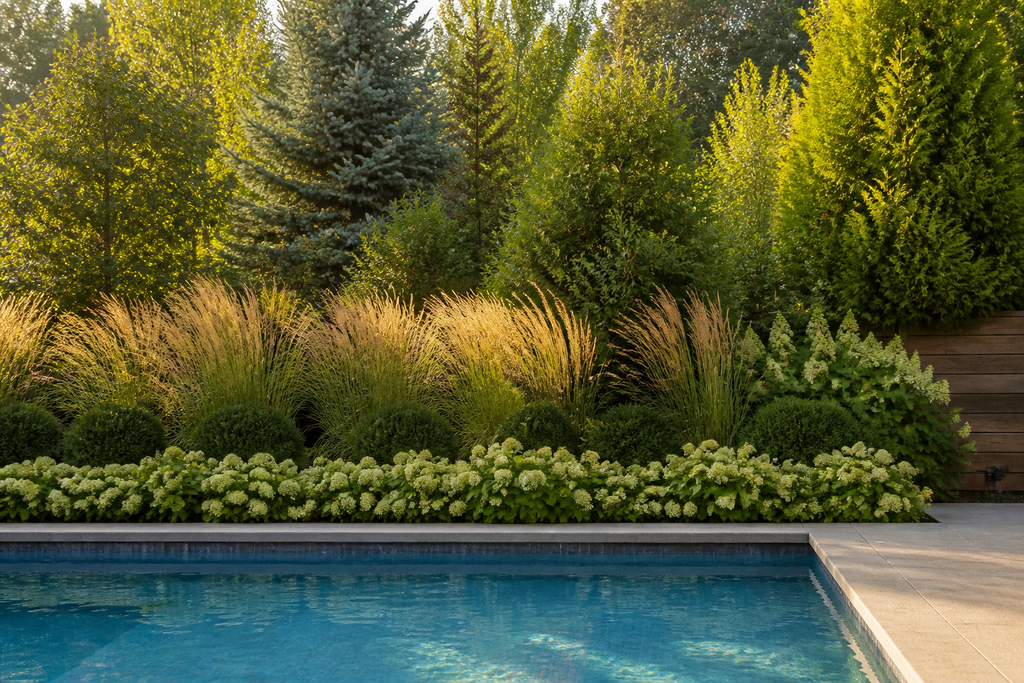
The best part of having a pool is the feeling of escape. It’s that quiet morning swim before the world wakes up, or the late afternoon sun with only the sound of water and wind in the trees. Effective privacy isn't just about blocking a view; it’s about creating a sanctuary that feels completely yours.
Good pool privacy planting ideas use layered evergreens, deciduous shrubs, and perennials to create a dense, natural screen that offers beauty in all four seasons. This approach provides more effective and beautiful screening than a simple fence or a single row of cedar trees, creating a true backyard retreat.
Beyond the Fence: Why a Living Screen is Better
A fence provides instant privacy, but it can also feel confining, like a box dropped into your yard. It blocks sightlines, but it does little to absorb sound and can create harsh visual lines that detract from a natural setting. A well-designed living screen, on the other hand, becomes part of the landscape.
Thoughtful planting offers benefits a fence can't match:
- Sound Absorption: The varied textures of leaves and branches help to diffuse and absorb ambient noise, from distant traffic to neighbours' lawnmowers, making your pool surround a calmer space.
- Wind Protection: A dense screen can soften prevailing winds, making your patio and pool area more comfortable on breezy days.
- Natural Beauty: Instead of a static wall, you get a dynamic view that changes with the light and the seasons. It provides texture, colour, and life.
- Wildlife Habitat: Layered plantings offer shelter and food for birds and pollinators, integrating your property into the surrounding ecosystem.
The Foundation: Evergreen Trees for a Year-Round Screen
The backbone of any effective privacy screen is an evergreen layer. These plants hold their needles or leaves through the winter, ensuring your pool area remains secluded even when the rest of the garden is dormant. A simple, single-file hedge of cedars can work, but a mixed, staggered planting feels much more natural and is more resilient.
In southern Ontario, with our distinct seasons and cooler climate, hardy choices are essential. We often specify:
- White Spruce (Picea glauca): A tough, native tree that is adaptable to various soils. It has a classic conical shape and provides excellent density.
- Serbian Spruce (Picea omorika): More graceful and slender than other spruces, with attractive two-toned needles. It's a great choice for adding elegance to a screen.
- Eastern White Cedar (Thuja occidentalis): The classic Ontario hedging plant. It's native, dense, and responds well to shearing if you want a more formal look. We prefer to let it grow more naturally in staggered groups.
Layering for Depth, Colour, and Texture
True privacy comes from layering. By placing plants of different heights and textures in front of your evergreen backbone, you create a rich, multi-dimensional garden that is impossible to see through. This is where you move from a simple screen to a beautifully composed landscape.
We build these layers from back to front:
- Tall Evergreen Layer: Your primary screen of Spruce, Pine, or Cedar.
- Mid-Layer Deciduous Shrubs: These add seasonal interest and bulk. Consider Serviceberry for its spring flowers and edible fruit, Red Osier Dogwood for its brilliant red winter stems, or Ninebark for its colourful foliage.
- Ornamental Grasses: Plants like Switchgrass or Feather Reed Grass add fine texture, movement, and sound. They are especially beautiful in the autumn light and provide winter interest.
- Low Perennials and Groundcovers: The final layer at the front of the border softens the edge and suppresses weeds. Japanese Forest Grass or drifts of Hostas can fill this role perfectly.
A great privacy screen isn't just a wall of green; it's a deep, textured composition that draws the eye in, rather than just stopping it.
This layered approach is central to our planting plans, ensuring the view from your home is just as compelling as the privacy it creates.
Fast-Growing Hedges: A Word on Patience
Many homeowners ask for the fastest-growing plants possible. While we understand the desire for instant privacy, the fastest-growing options are not always the best. They can quickly become overgrown, require constant pruning, and may have weaker wood or be more susceptible to pests and diseases.
A better strategy is to plan for growth. We design with a plant's mature size in mind, giving it the space it needs to thrive. For a new landscape, this requires some patience, but the result is a healthier, more sustainable, and ultimately more beautiful screen. You can learn more in our guide to caring for a new landscape in its first summer.
- **Right Plant, Right Place:** Does the plant suit your soil, sun exposure, and moisture levels?
- **Mature Size:** Have you left enough room for it to grow without crowding the pool deck or fence? A tree planted too close to a fence will eventually become a problem.
- **Debris:** Will it drop messy fruit, large leaves, or sharp needles into the pool? We avoid planting things like Honey Locust or certain pines directly adjacent to the water.
- **Root System:** Does it have aggressive, shallow roots that could damage the pool shell or plumbing? We avoid Willows and Poplars near any pool.
Planting Considerations Around the Pool Itself
Planting immediately around your in-ground pool requires special consideration. The area is a unique microclimate. The stone coping and patio retain heat, and splashed water may contain salt or chlorine.
We select plants that are tolerant of these conditions. Robust ornamental grasses, salt-tolerant perennials like Daylilies, and tough shrubs are excellent choices. It's also critical to ensure proper drainage is installed beneath the planting beds to direct water away from the pool's sub-structure.
Ultimately, creating privacy is about more than just hiding from view. It's about crafting an environment that feels lush, secure, and restorative. By using a thoughtful, layered approach with hardy plants suited to our climate, we can design a pool sanctuary that brings you joy for decades.
If you are planning a pool and want to integrate it seamlessly into your property, our design-build team can help. Get in touch with us to start the conversation.
Frequently asked
Questions, answered
- How long does it take for a privacy screen to mature?
- With proper plant selection and care, a layered privacy screen in the Headwaters region can provide significant visual separation within 3-5 years and should feel fully mature within 7-10 years. The evergreen backbone provides structure much sooner.
- What are the best low-maintenance privacy plants for Ontario?
- For low maintenance, we recommend hardy native or climate-appropriate species like White Spruce, Serviceberry, and Switchgrass. Once established, these plants require minimal intervention beyond occasional pruning and seasonal care.
- Can you plant a privacy screen on a sloped yard?
- Yes, absolutely. Slopes are an excellent opportunity for creating privacy. We often design tiered plantings integrated with natural stone retaining walls to manage the grade and create a lush, layered screen.
- How far from the pool should we plant trees and shrubs?
- As a rule of thumb, plant large trees at least 15-20 feet from the pool's edge to protect the structure from roots. Large shrubs should be at least 5-8 feet from the pool coping to allow for mature growth and access for maintenance.
- Do I need a permit to plant a tall hedge in the Headwaters region?
- Generally, no permit is required for planting trees or hedges on your property. However, municipal bylaws may restrict height, especially for corner lots or near property lines, so it's always wise to check with your local township.
Related on the site
Start a conversation
Planning a project in the Headwaters region?
We design and build across Hockley Valley, Caledon, Mulmur, Mono, King, and The Blue Mountains. Tell us about your property and we'll take it from there.
Book a discovery call →