
maintenance
Fall Soil Preparation and Mulching for High-End Estate Gardens
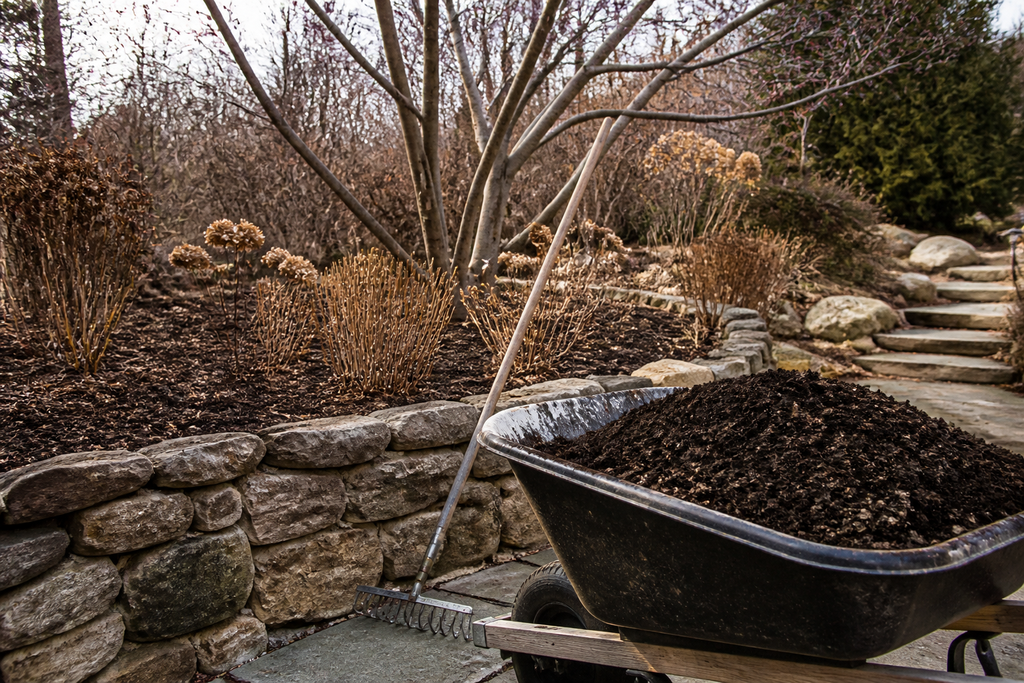
Proper fall garden maintenance in Ontario focuses on building soil health and insulating root systems before the deep freeze. By clearing diseased debris, working organic compost into the beds, and applying a thick layer of natural wood mulch, you protect perennial roots and ensure vigorous growth when spring arrives.
The Foundation of Next Spring's Growth
Walking the property in November, with the leaves down and a sharp chill in the air, the landscape reveals its bare structure. This quiet season is when the most critical work happens. The health of your garden next May is entirely dependent on how you put it to bed right now.
A comprehensive approach to estate garden care goes beyond simply raking leaves. It requires a deliberate strategy to protect the soil biome, insulate vulnerable root systems, and manage moisture levels through the freezing months.
To prepare a large property for the harsh southern Ontario winter, our teams focus on a specific sequence of late-season tasks:
- Cutting back diseased or pest-prone perennial foliage.
- Aerating and amending compacted garden beds.
- Applying protective winter mulch layers.
- Installing structural protection for delicate evergreens.
Clearing the Canvas: Preparing Garden Beds for Winter
The instinct for many homeowners is to cut everything down to the ground, leaving a sterile, empty bed. We take a more nuanced approach. While hygiene is important, stripping the garden bare removes valuable winter interest and eliminates natural habitats.
We remove foliage that is prone to mildew, like peonies or phlox, to prevent fungal spores from overwintering. However, we intentionally leave sturdy, structural plants standing. The dried seed heads of switchgrass and coneflower look spectacular catching the morning frost outside your kitchen window.
Properly preparing garden beds for winter means knowing exactly which plants benefit from a hard cutback and which ones should be left alone until the spring thaw.
Fall Soil Amendment: Feeding the Root Zone
After a long, demanding growing season, your soil is tired. The nutrients that fueled those massive summer blooms have been depleted. Before the ground freezes solid, we have a brief window to replenish the earth.
A healthy garden is built from the ground up, and fall is the absolute best time to feed the soil while the plants sleep.
We prefer working organic mushroom compost or well-rotted manure into the top few inches of the beds. As the freeze-thaw cycles of a southern Ontario winter break down these materials, the nutrients slowly migrate deeper into the root zone. By the time the ground thaws, the soil is rich, loose, and ready to support new growth.
| Organic Compost (Fall) | Synthetic Fertilizer (Spring) |
|---|---|
| Improves soil structure and drainage | Only provides a quick nutrient spike |
| Feeds the beneficial microbial life | Can burn tender new roots if over-applied |
| Breaks down slowly over the winter | Washes away quickly with heavy rains |
The Science and Art of Landscape Mulching
Mulch serves two entirely different purposes depending on the season. In summer, it retains moisture and suppresses weeds. In late fall, landscape mulching acts as a thermal blanket. Its primary job is to keep the soil temperature consistently cold, preventing the rapid freeze-thaw cycles that cause the ground to heave and tear delicate roots.
We wait until after the first few hard frosts to apply a fresh layer. If you mulch too early, you trap the residual summer heat in the soil, which can confuse plants into pushing late new growth that will inevitably be killed by the cold.
For high-end properties, we exclusively use natural shredded pine bark or cedar. These materials knit together beautifully, resisting the urge to blow away in winter storms, and they break down naturally to further improve the soil structure over time.
Protecting Vulnerable Plantings
Even the most robust planting plan occasionally includes a few delicate specimens that need extra help to survive the winter winds. Broadleaf evergreens and newly planted trees are particularly susceptible to winter burn—a condition where the freezing winds strip moisture from the leaves faster than the dormant roots can replace it.
We use heavy burlap screening to build temporary windbreaks around these vulnerable plants. The key is to drive the wooden stakes deep into the ground before the frost sets in, wrapping the burlap tight to the stakes but keeping it from touching the foliage directly.
For properties with extensive ornamental borders, keeping track of these seasonal tasks can be overwhelming. This is where professional garden maintenance ensures nothing is missed before the snow flies.
Planning Your Maintenance Schedule
Timing is everything. Complete your fall soil amendments and heavy pruning while the days are still relatively mild. Save the final layer of winter mulch and the burlap wrapping for late November or early December, just before the deep freeze locks the landscape in place.
If you are looking ahead to the next growing season, reviewing our guide on Planning for Spring: An Estate Garden Cleanup Checklist is a great way to understand the full lifecycle of property care. Similarly, if you noticed areas that struggled with the heat this past summer, now is the time to read A Guide to Drought-Tolerant Plants for Ontario Landscapes to plan your spring replacements.
Putting your garden to bed properly requires effort, but the reward is a landscape that wakes up strong, vibrant, and resilient. If you need help managing your property's seasonal transitions, get in touch with our team to discuss a tailored maintenance program.
Frequently asked
Questions, answered
- When is it too late to mulch garden beds in southern Ontario?
- As long as there isn't heavy snow cover, you can apply winter mulch. In fact, waiting until the ground is partially frozen in late November is ideal to prevent trapping warm air in the soil.
- Should I cut back all my ornamental grasses in the fall?
- We recommend leaving sturdy grasses, like switchgrass, standing through the winter. They provide excellent visual texture against the snow and serve as vital windbreaks to protect the crowns of smaller perennials.
- What type of compost is best for fall soil amendment?
- For heavy clay soils common in southern Ontario, we rely on rich organic mushroom compost. It breaks down slowly over the winter, improving soil structure and drainage by the time spring arrives.
- How do I stop frost heave from pushing my new plants out of the ground?
- Frost heave is caused by rapid freeze-thaw cycles. Applying a thick, three-inch layer of natural shredded pine bark after the first hard frost acts as insulation, keeping the soil temperature consistently cold.
- Do all evergreens need to be wrapped in burlap for winter?
- No, native and established evergreens are perfectly fine left exposed. We only use burlap screening for newly planted trees in their first few winters, or for vulnerable broadleaf species planted in high-wind corridors.
Related on the site
Start a conversation
Planning a project in the Headwaters region?
We design and build across Hockley Valley, Caledon, Mulmur, Mono, King, and The Blue Mountains. Tell us about your property and we'll take it from there.
Book a discovery call →