
ponds
Preparing Your Pond and Waterfall for a Southern Ontario Winter
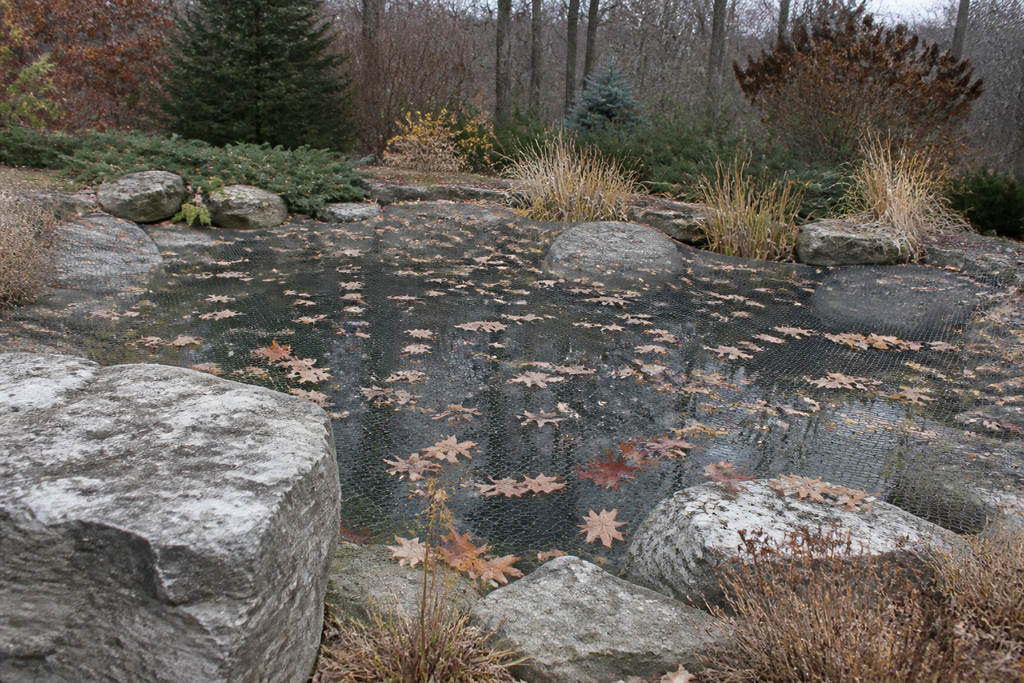
To winterize a pond in Ontario, you should clean out excess leaves and sludge, then cover the surface with fine mesh netting before the main leaf drop. When water temperatures consistently fall below 10°C, disconnect and store your pump. Finally, install a floating de-icer or an aerator to maintain an open hole in the ice for gas exchange, which is crucial for protecting fish.
The Goal: A Healthy Spring, Not a Sterile Winter
The crisp air of late summer transitioning into early fall is a reminder that the season is turning. For pond owners, this signals a shift from enjoying the water to preparing it for the cold months ahead.
The purpose of winterizing a pond isn't to scrub it sterile; it's to manage the natural cycle of decay so your aquatic ecosystem—from fish and frogs to beneficial bacteria—can overwinter safely and emerge healthy in the spring.
A pond left with a thick blanket of fall leaves will become a bog of decaying matter. This decomposition consumes oxygen, creating toxic anaerobic conditions that can be fatal to fish. A few focused tasks now will protect your investment and make the spring opening a simple pleasure, not a major cleanup.
Step 1: The Pre-Winter Cleanup (Late September to October)
Think of this as a final tidying-up before the landscape goes dormant. As the nights get cooler, it’s time to gently clean the pond basin. This reduces the organic load that would otherwise decompose under the ice.
Your primary tasks include:
- Trimming Plants: Cut back marginal plants like cattails, reeds, and irises to about 15 cm (6 inches) above the water line. This prevents their foliage from dying back and fouling the water. Remove any floating tropicals like water hyacinth that won't survive the winter. * Removing Debris: Use a long-handled skimmer net to remove floating leaves and debris.
For sunken sludge, a pond vacuum is ideal. If you don't have one, a soft-headed rake can gently pull decomposing leaves from the bottom.
Step 2: Netting for the Fall Leaf Drop
Once your initial cleanup is done, the single most effective thing you can do is install pond netting. This simple barrier prevents the deluge of autumn leaves from settling in your pond and creating a mess of organic sludge.
Here’s how to do it right:
- Choose a fine-mesh, durable net that is large enough to cover the entire pond surface with overlap. 2. Secure the netting around the perimeter with rocks or stakes, pulling it taut. 3. Ensure the net is suspended a few inches above the water's surface. A floating ball or other object in the center can help create a dome shape.
This prevents the net from sagging into the water and freezing in place. 4. Periodically, use a leaf blower or rake to clear the collected leaves off the net.
A few hours of work with a net during the main leaf drop prevents weeks of difficult cleanup next spring.
This proactive step is far easier than trying to remove a season's worth of waterlogged leaves from the bottom of a cold pond next spring.
Step 3: Managing Pumps, Filters, and UV Systems
As water temperatures drop, your pond's biological activity slows. Once the water is consistently below 10°C (50°F), it's time to shut down the main circulation equipment to prevent damage from freezing.
- **Disconnect the Pump:** Unplug the pump from its power source. Pull it from the pond, clean the housing and intake screen, and inspect it for wear.
- **Store it Wet:** To keep the seals and gaskets from drying out and cracking, store the pump in a bucket of water in a frost-free location, like a basement or heated garage.
- **Drain Equipment:** Completely drain water from all filters, UV clarifiers, and plumbing lines. Water left inside will freeze, expand, and crack expensive components. Open any drain plugs and use a shop vacuum to blow out residual water from the pipes.
This is also a good time to inspect the hidden mechanics of your system. Check for worn gaskets or cracked filter media so you can order replacements and be ready for a smooth spring start-up. Thinking ahead about the hidden mechanics of a natural water feature saves time and stress later.
The Waterfall Decision: To Run or Not to Run?
One of the most common questions we get is whether to shut down a waterfall for the winter. The answer depends on your system's design and your tolerance for risk. For most residential ponds, we recommend a full shutdown.
| Running the Waterfall | Shutting Down the Waterfall |
|---|---|
| Creates stunning ice sculptures and provides some aeration. The sound of water over ice can be beautiful on a calm winter day. | The safest and most common option. It eliminates the risk of water loss and protects your pump and plumbing from ice damage. |
| Carries a high risk of forming **ice dams**. These can divert water flow outside the pond basin, quickly draining your pond and potentially damaging the pump. | Ensures all components are protected. The process is straightforward and part of a standard winterization routine. |
| Requires a system specifically designed for winter operation, often with a dedicated, high-efficiency pump and auto-fill system to compensate for water loss. | Leaves you with a still, quiet pond surface that reflects the winter sky. The integrity of your surrounding [stonework](/services/stonework-natural-stone-retaining-systems) is protected from ice buildup. |
Protecting Your Fish Through the Freeze
If you have koi or other fish, ensuring their survival is the final and most critical step. As the water cools, fish enter a state of dormancy called torpor, settling at the warmest part of the pond—the very bottom. Their metabolism slows dramatically, which is why you should stop feeding them entirely once water temperatures are below 10°C.
Undigested food can rot in their gut, causing fatal health problems. Their primary need during winter is not food, but oxygen.
To prevent this, you need to maintain a small, consistent opening in the ice all winter. You have two main tools for this:
Floating De-Icer: This is not a pond heater. It's a low-wattage, thermostatically controlled device that uses just enough energy to keep a small hole (about the size of a dinner plate) free of ice. This allows toxic gases to escape and oxygen to enter.
Aerator / Bubbler: An aerator sits on the bottom and releases a column of bubbles. The movement of water to the surface prevents ice from forming in that area. Place the aerator in a shallow part of the pond, not the deepest, to avoid disrupting the warmer water layer where fish are resting.
Properly preparing your pond now is a rewarding process that sets the stage for a vibrant, healthy landscape next year. If you need a hand with the process, our teams are here to help. You can get in touch to discuss your property's needs.
Frequently asked
Questions, answered
- When should I start winterizing my pond in Ontario?
- Start with cleaning and netting in late September or early October. The final step of removing the pump should happen in late October or November, once the water temperature is consistently below 10°C.
- Do I need to remove all the sludge from the bottom?
- No, a thin layer is beneficial for the ecosystem. Our teams typically remove the bulk of the leaf sludge but leave the base layer intact to support beneficial bacteria and hibernating amphibians.
- Can my waterfall run all winter?
- It can if specifically designed for it, but we advise caution due to ice dam risks and potential water loss. For most ponds we build and service, we recommend a full shutdown to protect the system.
- What's the difference between a pond heater and a de-icer?
- A de-icer uses minimal energy to keep a small hole open in the ice for gas exchange. A pond heater attempts to warm the entire body of water, which is extremely inefficient and unnecessary for hardy fish like koi.
- My pond doesn't have fish. Do I still need to winterize it?
- Yes. At a minimum, you should pull and store your pump and drain filters to prevent expensive damage from freezing. A basic cleanout also makes your spring opening much faster and easier.
- Can Headwaters handle my pond winterization?
- Absolutely. Pond shutdown is a key part of our seasonal [garden maintenance](/services/garden-maintenance) programs for clients whose properties we manage.
Related on the site
Start a conversation
Planning a project in the Headwaters region?
We design and build across Hockley Valley, Caledon, Mulmur, Mono, King, and The Blue Mountains. Tell us about your property and we'll take it from there.
Book a discovery call →