
ponds
The Hidden Mechanics of a Natural Water Feature
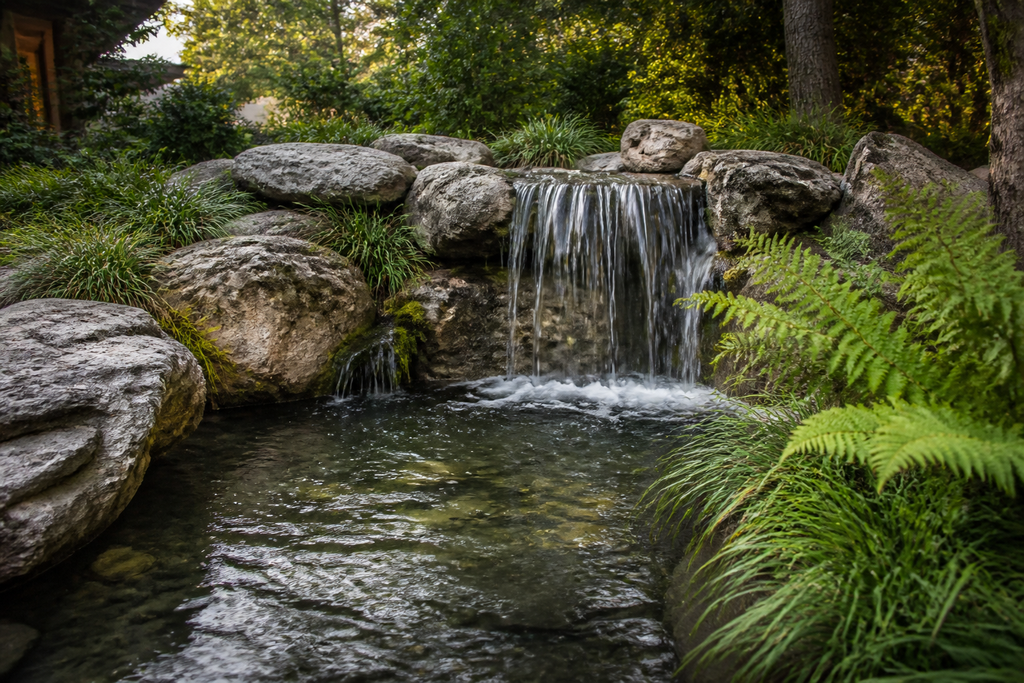
A natural pond circulation system uses a pump, skimmer, and biofilter to mimic a natural stream. The skimmer removes surface debris, the pump moves water to a biological filter (often a waterfall box), where beneficial bacteria clean it. The water then returns to the pond, creating a clear, healthy, low-maintenance ecosystem. This process is key for properties across the Headwaters region seeking beautiful water features without constant chemical treatments.
The Core Trio: Skimmer, Biofilter, and Pump
Imagine a quiet stream in a forest. The water is constantly moving, tumbling over rocks and filtering through gravel. A well-designed pond or waterfall on your property does the same thing, just in a managed, closed loop. The magic isn't in chemicals; it's in circulation driven by three components working in harmony.
The Skimmer: This is the first line of defense. A box set into the side of the pond, its job is to pull water from the surface, just like the infinity edge of a pool. It collects floating debris like leaves, pollen, and twigs in a basket and net. By capturing this organic matter before it sinks, the skimmer dramatically reduces the workload on the rest of the system and prevents the buildup of bottom sludge.
The Pump: Tucked away inside the skimmer box, safe from debris, is the submersible pump. This is the heart of the system. It draws the pre-filtered water from the skimmer and pushes it through hidden plumbing up to the top of your waterfall or the start of your stream.
The Biofilter (or Waterfall Box): This is the brain. The water pumped from the skimmer enters a specialized box, often disguised as the source of a waterfall. This box contains filter mats and porous media (like lava rock or plastic bio-balls). This media provides immense surface area for beneficial bacteria to colonize. These microscopic allies are the key to water clarity, breaking down invisible organic waste into nutrients that plants can use.
From here, the clean, filtered water spills out, forming the waterfall that returns it to the pond, completing the cycle.
Mechanical vs. Biological Filtration: A Partnership
It’s helpful to think of filtration in two distinct ways. A healthy pond needs both, and a good design ensures they work together seamlessly.
Mechanical filtration is the physical removal of solids. It’s what you can see. The skimmer basket catching leaves is the primary example. This is a crucial first step. Without it, the biological filter would quickly become clogged with debris and fail to function properly. Think of it as the bouncer at the door, stopping trouble before it gets inside.
Biological filtration is the invisible workhorse. After the water passes the skimmer, it still contains dissolved organic compounds—fish waste, ammonia from decaying matter, and other things you can't see. The bacteria in the biofilter consume these compounds, converting harmful ammonia into harmless nitrates. This natural process, called the nitrogen cycle, is what keeps water from becoming a murky, smelly mess.
The Role of the Waterfall: More Than Just a Pretty Face
The waterfall is often the star of the show, but its role is far more than aesthetic. As the filtered water tumbles over the rocks and splashes back into the pond, it gets infused with oxygen. This aeration is vital for the health of fish, plants, and the beneficial bacteria themselves. A stagnant pond has low oxygen, which leads to algae and foul odours.
The sound of moving water is a key part of the experience, but the waterfall's true function is to breathe life back into the pond.
Furthermore, the waterfall box itself is the main biological filter. The water is forced to flow through the filter media before it spills out. By integrating the filter directly into the waterfall, we hide the mechanics in plain sight, turning a functional necessity into the landscape’s most captivating feature. For more on the acoustic benefits, see our guide to designing water features for acoustic ambiance.
What About "Pondless" Waterfalls?
What if you love the sound and look of a waterfall but don't want the open water of a pond? This is where a pondless waterfall comes in. The system is nearly identical, with one key difference: instead of a pond, the water collects in a hidden underground reservoir.
Here’s how it works:
- A waterfall is built into a hillside or slope, just like a traditional one.
- At the base, instead of a pond, there's a gravel-filled basin with a durable rubber liner.
- Underneath the gravel sits a water storage vault, which houses the pump.
- Water cascades down the falls, disappears into the gravel, and collects in the reservoir below to be pumped back to the top.
Pondless waterfalls are an excellent choice for properties where safety for children or pets is a primary concern, or for smaller spaces where a full pond isn't practical. They offer all the sensory benefits of moving water with significantly less maintenance, as there's no standing water to skim leaves from.
Getting the Balance Right: Sizing and Flow
Creating a self-sustaining ecosystem isn't as simple as just buying a pump and a filter. The components must be correctly sized for the volume of water, the desired flow rate, and the specific conditions of your property. This is a critical step in our landscape design process.
- Pump Sizing: A pump that's too weak won't circulate the water fast enough to keep it clean. A pump that's too powerful can create a torrent instead of a gentle stream, wasting energy and creating unwanted noise.
- Pipe Diameter: The plumbing that connects the skimmer to the waterfall must be wide enough to handle the pump's flow without excessive friction, which reduces efficiency.
- Filter Capacity: The biofilter must be large enough to process the waste load of the pond. A small filter on a large pond will be quickly overwhelmed.
Our team calculates the ideal turnover rate—how often the entire volume of the pond passes through the filter—to ensure your water feature remains clear and healthy. For most naturalistic ponds, we typically aim to turn the water over at least once every hour.
Beyond Mechanics: Integrating Plants and Stone
The circulation system is the skeleton, but the pond truly comes to life with the finishing touches. The mechanics do the heavy lifting of filtration, but a complete ecosystem includes plants and properly placed natural stone.
Aquatic plants play a final, crucial role in polishing the water. They absorb the nitrates produced by the biological filter, essentially starving algae of its food source. Plants like water lilies provide shade, cooling the water and further discouraging algae growth, while marginal plants around the edge soften the transition from stone to water.
Expert stonework is what makes the entire feature believable. It’s about more than just hiding the liner. It's about creating ledges for plants, shelves for fish to hide under, and a natural, irregular edge that mimics a shoreline found in the wild. The right stone, placed with an artist’s eye, is the final piece of the puzzle.
Building a healthy, naturalistic water feature is about creating a balanced system. When designed and built correctly, the mechanics fade into the background, leaving you with nothing but the peaceful sound of water and the simple beauty of a thriving ecosystem. If you're ready to explore how a water feature could fit into your property in the Headwaters region or The Blue Mountains, we'd be happy to start the conversation.
You can get in touch with our team to book a discovery call.
Frequently asked
Questions, answered
- How often does a natural pond need to be cleaned?
- A well-designed system with proper circulation is largely self-cleaning. The main tasks are emptying the skimmer basket as needed and a more thorough check-up or clean-out in the spring and fall, which can be handled as part of a garden maintenance plan.
- Can I have a waterfall without a pond?
- Absolutely. This is called a 'pondless' waterfall, and it's an excellent option for properties in areas like King or Caledon where safety or space is a concern. The water disappears into a hidden underground reservoir at the base.
- What truly makes a pond 'low maintenance'?
- Low maintenance comes from a properly designed and balanced system from the start. This means sizing the pump, skimmer, and biofilter correctly for the pond's volume, ensuring you have a system that does the work for you, rather than creating work.
- Do I need to run the pond pump 24/7?
- Yes. Continuous circulation is essential. The beneficial bacteria in your biofilter need a constant supply of oxygenated water to survive and do their job. Turning the pump off, even overnight, can harm the ecosystem and lead to cloudy water.
- How do you hide the pump and filter components?
- We integrate the mechanical components into the landscape. The skimmer is set at the pond's edge with a lid that can be covered by a faux stone, and the waterfall box becomes the very source of the falls, hidden by carefully placed natural stone and plantings.
Related on the site
Start a conversation
Planning a project in the Headwaters region?
We design and build across Hockley Valley, Caledon, Mulmur, Mono, King, and The Blue Mountains. Tell us about your property and we'll take it from there.
Book a discovery call →