
design
Site Planning for Caledon Estate Landscapes: Trees, Septic, and Driveways
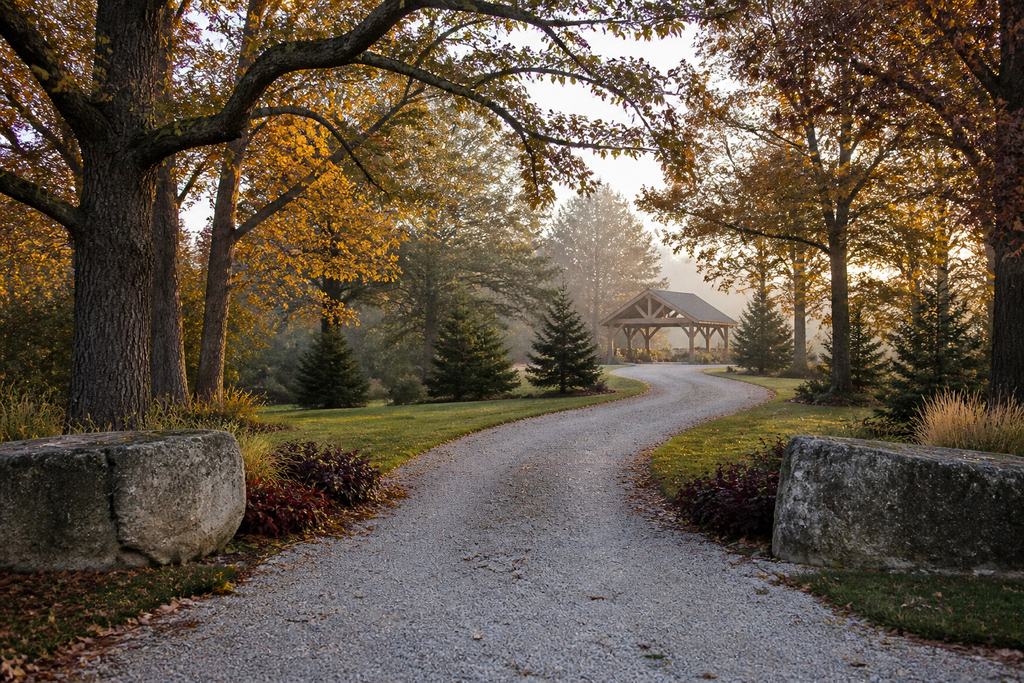
When planning landscaping in Caledon, rural estate properties require specialized site planning before aesthetic design begins. A successful master plan must account for well and septic system setbacks, manage stormwater across significant grade changes, and protect the critical root zones of mature trees while designing long driveway approaches.
There is a distinct rhythm to mornings on a rural property, watching the mist lift off the fields from the kitchen window. But translating that vision into a functional outdoor living space requires careful groundwork. Often, when homeowners begin searching for a landscape designer Caledon, they are focused on the final finishes—the flagstone terrace or the custom pavilion.
Yet the real success of an estate property lies in the invisible infrastructure.
Because we are currently in the late fall, now is the exact right time to tackle the logistical puzzle of rural site planning. Before we can talk about plant palettes or pool finishes, we have to map out the realities of country living.
The Art of the Estate Approach
A long, winding driveway is the hallmark of rural property landscape design. It sets the tone for the entire estate. But a long approach is not just a visual feature; it is a significant piece of civil grading.
Water management is the primary challenge. Without proper crowning and ditching, a heavy spring rain will wash out gravel and undermine paving. We focus on integrating the driveway into the natural topography rather than fighting it.
Key considerations for estate driveways:
- Emergency access: Ensuring the turning radius accommodates fire trucks and delivery vehicles.
- Snow management: Planning dedicated clearing zones that will not damage winter-dormant garden beds.
- Material transitions: Moving from an asphalt or gravel main drive to an upgraded natural stone apron near the house.
Navigating Well and Septic Systems in Rural Design
In town, you connect to municipal services and never think about them again. Out here, your property is its own utility company. Designing around well heads and septic systems is a non-negotiable part of estate landscaping Ontario.
We must maintain strict setbacks for pools, pavilions, and retaining walls. Your septic tank also requires regular access for a pump truck. We design discrete, reinforced pathways that allow heavy trucks to reach the tank without cracking your primary walkways or crushing irrigation lines.
Protecting and Designing Around Mature Trees
Many rural properties feature century-old sugar maples, towering oaks, or established cedar stands. These trees provide immediate scale and character that would take decades to grow from scratch.
The most valuable asset on a new estate property is often the canopy that was there long before the house was built.
Protecting these trees requires understanding their critical root zones. You cannot simply add or remove three feet of soil around a mature oak and expect it to survive. Grading changes smother roots by cutting off oxygen.
When designing around mature trees, we use specific strategies:
Retaining walls: Using dry-laid armour stone to hold grade outside the drip line (the outer edge of the branch spread). * Cantilevered decking: Building structures on helical piles (deep steel posts) rather than pouring concrete footings that sever major roots.
Understory planting: Selecting shade-tolerant, shallow-rooted species like Japanese forest grass and native ferns that do not compete aggressively for nutrients.
Managing Grade and Drainage on Large Lots
Rural properties rarely sit perfectly flat. Managing how water moves across a multi-acre site is the foundation of reshaping land for beauty and function.
If you are planning a pool or a large level terrace, we have to cut into the slope and retain the earth. This is where structural stonework becomes both a necessity and a central design feature for your landscape design and construction master plan.
| Drainage Strategy | Best Application |
|---|---|
| French drains | Moving water away from foundations and pool decks invisibly underground. |
| Dry creek beds | Managing heavy surface runoff while creating a naturalistic, rocky garden feature. |
| Permeable paving | Allowing water to percolate through the patio joints, reducing total runoff. |
Planning Your Project Timelines This Fall
Because we are currently in the off-season, November is the ideal window to begin planning your estate landscape for next year. Rural projects often involve conservation authorities, which adds months to the permitting phase.
If your property includes a ravine, a watercourse, or protected woodlands, you will need approval before a single shovel hits the dirt.
By finalizing our Caledon landscape design and construction work plans during the winter, you secure your spot in the spring construction queue. This proactive approach avoids the costly delays of mid-summer permitting and ensures your property is ready to enjoy as early as possible.
Frequently asked
Questions, answered
- How close can I build a pool to my septic system in Caledon?
- Setbacks vary depending on your specific septic system and local municipal codes, but generally, a pool must be kept well away from both the tank and the weeping bed. We map these utilities during the initial site survey to ensure your pool design is fully compliant before applying for permits.
- Can you change the grade of my yard if I have large, mature trees?
- We can adjust the grade, but we must stay outside the tree's critical root zone, which typically extends to the drip line. Adding or removing soil directly over the roots will suffocate or damage the tree, so we use structural retaining walls to manage grade changes safely away from the trunk.
- Do I need a conservation permit for landscaping my rural property?
- If your property falls within a regulated area—common in the Headwaters region near ravines, wetlands, or the Niagara Escarpment—you will likely need a permit. We handle this coordination during the design phase to ensure the proposed hardscaping and grading meet all environmental regulations.
- When should we start designing our estate landscape?
- Fall is the absolute best time to start. Designing the master plan, selecting materials like Wiarton flagstone, and securing municipal or conservation permits typically takes several months. Starting in November ensures you are ready for ground-break as soon as the frost lifts in spring.
Related on the site
Start a conversation
Planning a project in the Headwaters region?
We design and build across Hockley Valley, Caledon, Mulmur, Mono, King, and The Blue Mountains. Tell us about your property and we'll take it from there.
Book a discovery call →