
design
Solving Property Drainage Challenges with Thoughtful Landscape Design
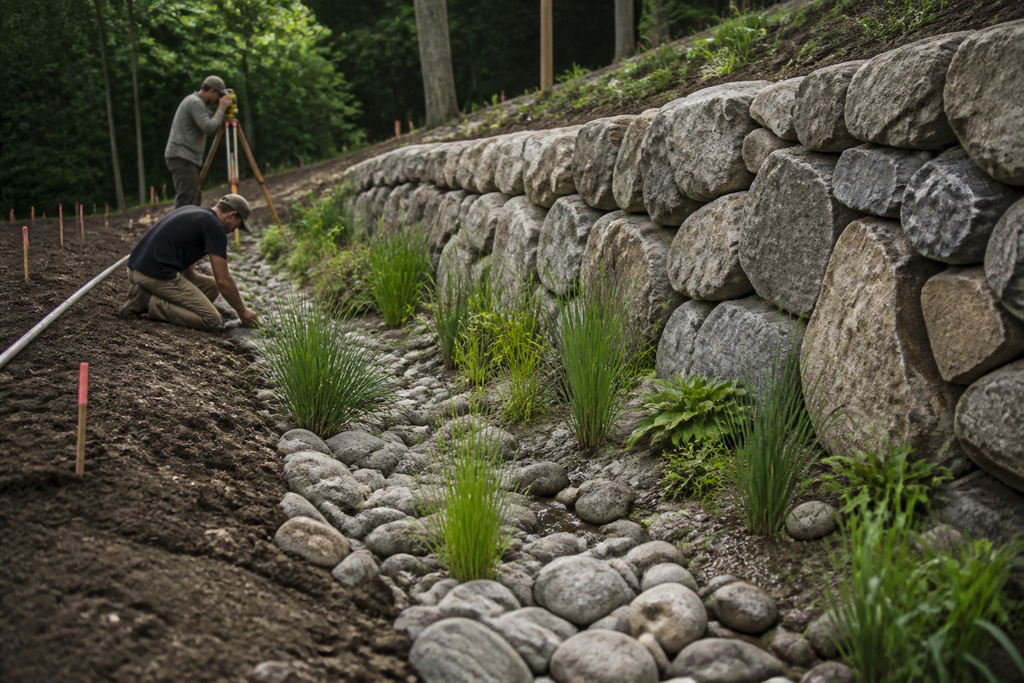
Effective landscape drainage solutions involve more than just installing a pipe. The best approach integrates grading, subsurface systems like French drains, and thoughtful planting to manage water proactively. By reshaping the land and choosing the right materials, you can solve soggy lawn issues and protect your home's foundation permanently.
It’s a familiar scene after a heavy summer rain: the lawn squishes underfoot for days, a persistent puddle drowns the corner of the patio, and you worry about water seeping toward your home’s foundation. These aren't just minor annoyances; they are signs that water isn't being managed effectively on your property. A landscape that holds water is a landscape you can't fully use or enjoy.
Great landscape design is about creating beautiful, functional spaces, and nothing is less functional than a swampy backyard. The solution isn't about fighting the water, but about guiding it with intention. A well-drained property is the invisible foundation of every successful outdoor living space, from a firm, green lawn to a dry, welcoming stone terrace.
Reading the Land: Diagnosing Your Drainage Problem
Before we can solve a water problem, we have to understand its source. Water issues on a property are rarely simple and often stem from a combination of factors. During our initial site assessment, we look for the root cause, which typically falls into one of several categories.
Understanding the 'why' behind your wet yard is the first step. It allows us to design a solution that addresses the actual problem, rather than just treating a symptom.
Common culprits include:
- Surface Water Runoff: Water flowing across the surface of your property from rain or snowmelt, often from higher ground, neighbouring properties, or hard surfaces like driveways.
- Improper Grading: The land may be too flat, or worse, sloped toward your house, trapping water against the foundation instead of directing it away.
- Compacted or Clay Soil: Heavy clay soils, common in many parts of southern Ontario, drain very slowly. Construction equipment can also compact the soil, preventing water from percolating downwards.
- High Water Table: In some areas, the natural groundwater level is close to the surface, leading to saturated soil, especially in the spring.
- Concentrated Downspouts: Gutters and downspouts that discharge directly at the foundation are a primary source of basement leaks and saturated gardens.
The Foundation of Control: Grading and Swales
The single most powerful tool for managing water is shaping the land itself. Proper grading—the process of sculpting the terrain to create gentle, deliberate slopes—is the art of telling water where to go. The goal is always to move it away from your home's foundation, patios, and other structures, and guide it toward an area where it can be safely absorbed or discharged.
For an in-depth look at this process, see our guide on The Art of the Grade: Reshaping Land for Beauty & Function. A swale, a shallow, wide, and vegetated channel, is one of our most-used grading tools. It looks like a gentle depression in the landscape, but it functions as a subtle, effective water conveyor.
It collects runoff and slows it down, allowing more of it to soak into the ground while directing the excess away.
Invisible Solutions: Subsurface Drainage Systems
Sometimes, grading alone isn't enough, especially in very flat areas or places with persistent groundwater. This is where subsurface drainage comes in. These systems work underground to collect and redirect water, and they are completely hidden once the landscape is finished.
The best drainage solutions are the ones you never see; they just work, letting you enjoy your property without a second thought.
Here are the most common systems we design and build:
- French Drains: A trench filled with gravel and a perforated pipe that collects groundwater and surface water, carrying it away. We often use them along the base of a retaining wall or across a chronically soggy lawn.
- Catch Basins: Grated inlets set into lawns and patios that collect surface water quickly during heavy rain. They connect via solid pipe to a discharge point away from the main living areas.
- Dry Wells: An underground pit filled with stone that acts as a reservoir. It collects water from catch basins or French drains and allows it to slowly percolate back into the subsoil. This is an excellent way to keep water on your property without creating a wet area.
These systems require precise installation. The pipes must be sloped correctly, wrapped in a filter fabric (a geotextile sock) to prevent clogging with silt, and backfilled with the right type of clear stone.
Working with Water: Rain Gardens and Permeable Surfaces
Instead of just trying to get rid of water, modern landscape design often seeks to embrace it. A soggy low spot on your property can be transformed from a problem into a beautiful and ecologically productive feature. This approach not only solves the drainage issue but also creates a unique garden habitat.
Rain gardens are shallow, depressed garden beds planted with water-loving perennials, grasses, and shrubs. They are designed to collect runoff from roofs or patios, holding the water for a short period, often less than 48 hours depending on design and soil conditions, while it filters back into the ground. They are beautiful, low-maintenance features that thrive on the extra moisture.
Plants we often use in these areas include:
- Red Osier Dogwood (for its striking red winter stems)
- Switchgrass (a tall, elegant native grass)
- Blue Flag Iris
- Joe Pye Weed
Another strategy is using permeable surfaces. Instead of an impermeable concrete or asphalt driveway, permeable pavers set on an open-graded stone base allow rainwater to pass right through into the ground below. This reduces runoff, recharges groundwater, and can even reduce the need for catch basins.
Protecting Your Structures: Pools, Patios, and Foundations
Water is the enemy of built structures. Frost heave, hydrostatic pressure, and erosion can destroy even the most well-built patio or wall over time if drainage is not managed correctly. Every element we build, from a simple walkway to a complex pool build, has drainage built into its core design.
For a natural stone patio, this means a deep, compacted base of open-graded gravel that allows water to drain away freely. For a retaining wall, it means including a perforated pipe and clear stone backfill to relieve the immense pressure water can exert from behind the wall.
When planning a new gunite pool, we analyze the entire site's topography to ensure the pool and its surround won't become a giant bathtub collecting runoff. Proper grading around the pool deck is essential to direct water away from the pool itself and prevent erosion on downhill slopes.
Integrating Drainage into a Master Plan
Ultimately, the most resilient and cost-effective landscape drainage solutions are not afterthoughts. They are woven into the very fabric of a comprehensive landscape design from the beginning. When we develop a master plan for a property, we are thinking about water flow with every decision we make.
Where should the house be sited? How does the driveway approach affect runoff? Where will patios and walkways be located? How can we use grading to create beautiful, terraced spaces that also happen to manage water perfectly? For custom home projects, this early collaboration is key. A strong builder partnership ensures that site grading, foundation drainage, and the landscape plan all work together seamlessly.
By planning for water from day one, we create landscapes that are not only beautiful on the surface but are also stable, healthy, and built to last for decades. If you're tired of battling wet spots and want to reclaim your property, it's time to think about a holistic solution. When you're ready, get in touch with our team to start the conversation.
Frequently asked
Questions, answered
- How do I know if I have a serious drainage problem?
- Persistent standing water 24-48 hours after rain, constantly soggy lawns, water pooling near your foundation, or visible erosion channels are all clear signs. These issues can compromise both your home's structure and your landscape's health.
- Is regrading my entire property a massive undertaking?
- It can be, but it's the most fundamental solution. At Headwaters, we integrate grading into the full landscape construction process, making it an efficient part of creating your new terraces, gardens, and lawn areas, rather than a standalone repair.
- What's the difference between a swale and a French drain?
- A swale is a visible, shallow, vegetated channel on the surface designed to guide water. A French drain is an underground system with a perforated pipe and gravel that collects and moves groundwater out of sight.
- Can you fix drainage issues on an established property?
- Yes, absolutely. While it's most efficient to design drainage into a new build, we frequently develop plans to correct water management on mature properties. This often involves carefully removing and restoring existing plantings and hardscapes.
- Do I need a permit for landscape drainage work in Ontario?
- It depends. Minor grading may not, but work that alters significant water flow, involves a retaining wall over a certain height, or is near a regulated area (like a ravine or conservation land) often requires permits. We manage this entire process as part of our project scope.
Related on the site
Start a conversation
Planning a project in the Headwaters region?
We design and build across Hockley Valley, Caledon, Mulmur, Mono, King, and The Blue Mountains. Tell us about your property and we'll take it from there.
Book a discovery call →