
planting
Why Autumn is the Ideal Season for Installing Large Caliper Trees
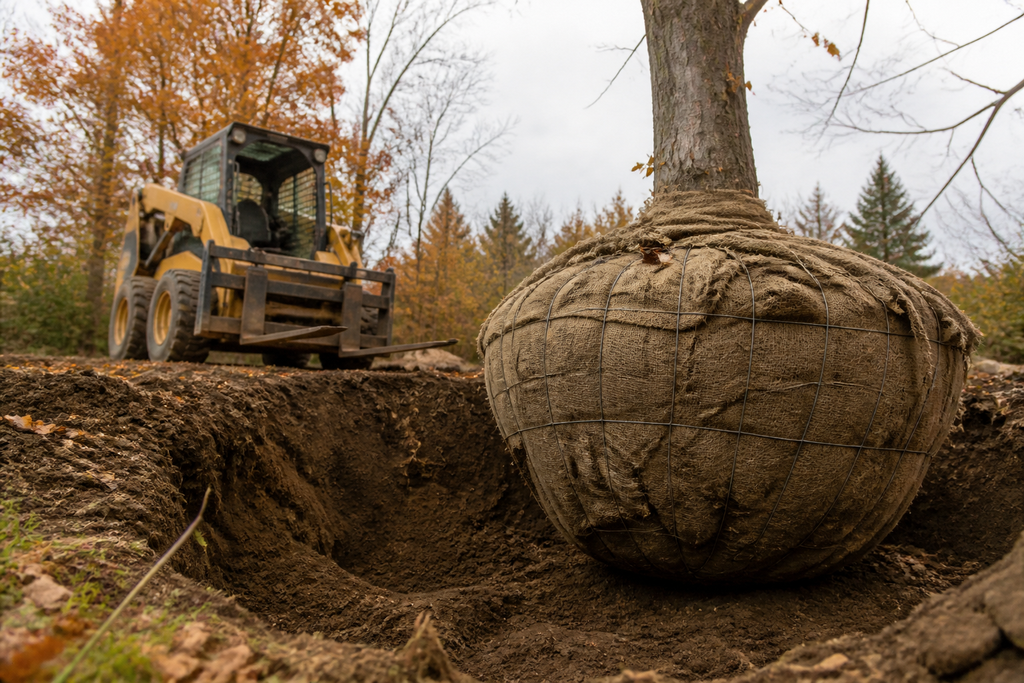
Planting large caliper trees in autumn is ideal because the combination of warm soil and cool air encourages rapid root establishment before winter. Without the stress of summer heat or the demand to produce new leaves, mature trees focus their energy entirely on anchoring into your landscape.
The Science of the Autumn Planting Window
Right now, in mid-November, the morning air is undeniably brisk. But beneath the surface, the soil tells a different story. The earth retains the heat of summer much longer than the atmosphere does. This thermal lag is the secret to successful fall tree planting Ontario landscapes depend on.
When we plant a tree in the spring, it immediately faces a biological dilemma. It must push out new leaves to capture sunlight, while simultaneously trying to grow new roots to absorb water. It is a race against the impending summer heat.
In the fall, that dynamic flips. The tree has dropped its leaves, halting transpiration (the process of water evaporating from foliage). With canopy growth paused, the tree channels all its available energy downward.
Because the ground typically doesn't freeze solid until late December, November plantings still have several weeks of active root development. This ensures strong root establishment before winter, setting the tree up to thrive the moment the spring thaw arrives.
What Does "Large Caliper" Actually Mean?
If you have ever visited a retail garden centre, you are likely familiar with trees sold in plastic pots. These are typically young saplings. When we talk about planting large caliper trees, we are operating on a completely different scale.
Caliper refers to the diameter of the tree's trunk, usually measured about six inches above the soil line. For estate landscapes, we typically specify trees in the three-to-six-inch caliper range, or sometimes even larger. These are mature specimens that have been growing in a nursery field for a decade or more.
| Feature | Potted Sapling | Large Caliper Tree |
|---|---|---|
| Trunk Size | 1 to 2 inches | 3 to 6+ inches |
| Root System | Contained in a plastic pot | Dug from a field, wrapped in burlap and wire |
| Visual Impact | Requires 10+ years to mature | Instant architectural scale |
| Installation | Hand shovel | Skid steer or tree spade required |
These trees are not lifted by hand. They are harvested with specialized machinery that scoops out a massive root ball, which is then secured with burlap and a heavy wire basket. This preserves the critical root mass required to support a mature canopy.
Instant Architecture for Your Property
There is a profound difference between waiting for a garden to grow and installing a garden that already feels established. This is particularly true when integrating landscape design with a new build. A freshly constructed custom home sitting on a bare, graded lot can look stark and unanchored.
A mature tree doesn't just fill a gap in the garden; it instantly grounds a new home to its site, making the architecture look as though it has always belonged there.
Mature tree installation provides immediate scale. A cluster of large caliper sugar maples or a sturdy row of mature white spruce instantly defines property lines, blocks undesirable sightlines, and provides immediate privacy. You don't have to wait a decade to enjoy your morning coffee on the terrace without feeling exposed to the road.
The Logistics of Moving Heavy Trees
The primary challenge of the autumn landscape planting season is logistical. A large caliper tree with a fully saturated root ball can easily weigh anywhere from 800 to well over 2,500 pounds depending on caliper size. Moving these specimens requires careful planning, heavy machinery, and a deep respect for the existing site.
Our team uses articulated loaders and skid steers to transport these trees from the delivery truck to the planting hole. We use specialized tree forks to cradle the root ball, ensuring the trunk itself is never used as a lifting point, which would severely damage the tree's vascular system.
Once the tree is positioned in the hole, we remove the top third of the wire basket and the burlap. The remaining wire is left intact to keep the root ball stable; it will rust away safely in the soil over time without restricting growth.
Site Preparation and Soil Management
Dropping a beautiful tree into poor soil is a recipe for failure. Proper fall soil preparation is the foundation of our planting process. The soil must provide structure, nutrients, and proper drainage.
- Percolation test: Ensure the hole actually drains. A hole dug in heavy clay can act like a bathtub, drowning the tree.
- Scarify the edges: Use a spade to rough up the smooth, glazed sides of the planting hole so roots can penetrate outward.
- Locate the root flare: The point where the trunk flares out into roots must remain visible above the final soil grade.
- Amend carefully: We backfill with the native soil mixed with high-quality compost, avoiding overly rich topsoil that discourages roots from spreading.
Post-Planting Care Through the Freeze
Just because the air is cold does not mean the tree's need for water has vanished. A newly planted large caliper tree requires deep, consistent watering right up until the ground freezes solid. We typically recommend a slow, deep soak once a week during dry autumn stretches.
After watering, we apply a three-inch layer of natural shredded pine mulch over the root zone, keeping it pulled a few inches away from the trunk. This mulch layer acts as a thermal blanket, insulating the soil and extending the window for root growth by keeping the frost at bay just a little longer.
Finally, because these trees carry a large sail area of branches, staking is often necessary. We use wide, flexible strapping attached to deep anchors. This prevents harsh winter winds from rocking the tree, which would tear the delicate new roots trying to establish themselves in the soil. As part of our ongoing maintenance programs, we return the following year to remove these stakes once the tree is firmly anchored.
Investing in mature trees transforms a property overnight. By taking advantage of the autumn planting window, you ensure those trees have the strongest possible start for the decades to come.
Frequently asked
Questions, answered
- Is it too late to plant large trees in November?
- Not at all. In the Headwaters region, the ground is typically workable until late December. As long as we can dig the proper hole and the soil isn't frozen solid, November is an excellent time for planting.
- How big of a tree can you safely transplant?
- For residential estate properties, we routinely plant trees with a 4 to 8-inch trunk caliper. These trees are massive and require heavy equipment like skid steers and proper access routes through your property to install safely.
- Do large trees need to be staked over the winter?
- Yes, especially on exposed, windy properties in areas like Mono or Mulmur. Staking prevents the winter winds from rocking the heavy canopy, which can tear the delicate new roots trying to establish in the soil.
- How often should I water a newly planted tree in the fall?
- You should provide a deep, slow soak once a week until the ground freezes solid. Even though the air is cold, the roots are actively growing and require moisture to survive the impending winter.
- Will the wire basket and burlap restrict my tree's root growth?
- No. During installation, our team removes the top third of the wire basket and burlap. The lower portion remains to keep the heavy root ball intact and will safely rust and degrade in the soil over time.
Related on the site
Start a conversation
Planning a project in the Headwaters region?
We design and build across Hockley Valley, Caledon, Mulmur, Mono, King, and The Blue Mountains. Tell us about your property and we'll take it from there.
Book a discovery call →