
planting
A Homeowner's Planting Guide for Rocky, Shaded Gardens in Mono
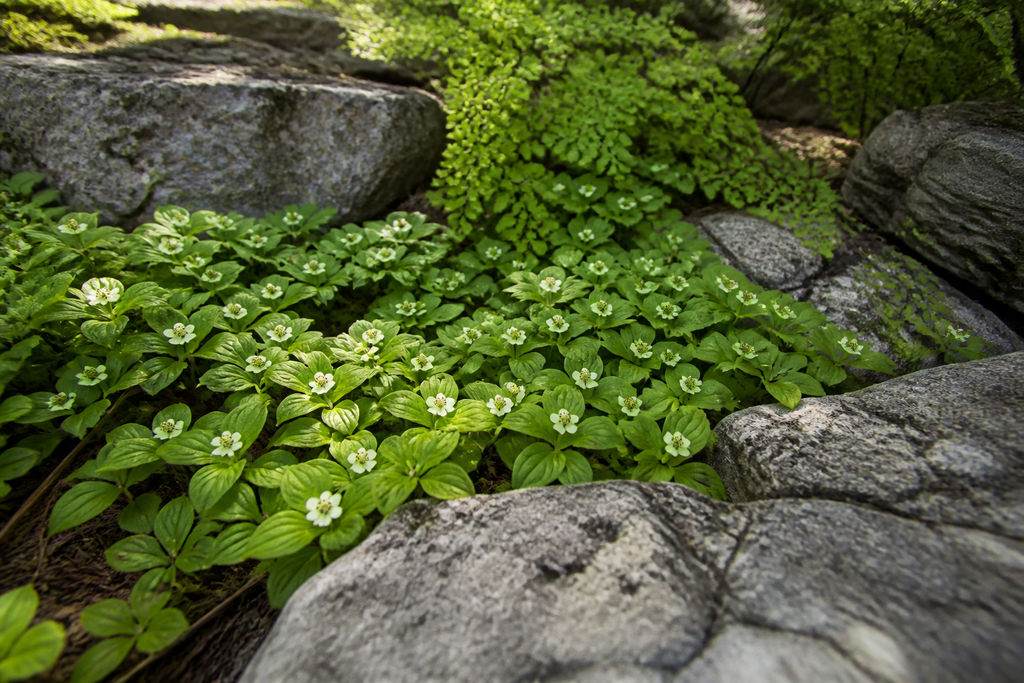
The challenge of a property in Mono is often its greatest asset: the beautiful, rugged character of the Niagara Escarpment. For landscaping rocky, shaded ground, the key is to work with the land. We select plants that thrive in these exact conditions, amend soil in targeted pockets, and use the existing stone as a powerful design feature, creating a garden that feels like it has always been there.
Reading the Land: What "Rocky and Shaded" Means in Mono
When you own a property in Mono, you’re not just dealing with a generic backyard. You’re a steward of a piece of the Niagara Escarpment. This means the terms “rocky” and “shaded” have very specific meanings. The ground is often a thin layer of soil overtop solid limestone bedrock, with boulders and stone left behind by glaciers. This isn't something you can just dig through with a shovel.
Shade is also more complex here. You might have the deep, cool shade cast by a mature maple forest. Or, if your property is in a valley, you might lose direct sunlight hours before sunset as the sun dips below the western ridge. It’s crucial to observe how light moves across your property throughout the day and the season.
This is the first step in any of our Mono landscape design and construction work.
Don't Fight the Rock, Feature It
The most successful landscapes don't try to force a suburban ideal onto a country property. They amplify the natural character. That weathered, moss-covered stone isn't a problem to be solved; it's a gift. We often use these existing rock features as the anchor for the entire design.
Here’s how we approach it:
- Work between the stones: We identify natural pockets and fissures in the rock where soil can be added and plants can take root. This creates a garden that looks like it grew there organically.
- Build with local stone: We build stunning dry-stone retaining walls and garden beds using stone that matches the local geology. This helps define spaces, create level planting areas, and makes the new construction feel integrated.
- Create stone pathways: A simple flagstone path winding between boulders and ferns feels completely at home. It invites you to explore the garden without disturbing the delicate ecosystem.
By using natural stone that complements what's already there, the entire landscape feels cohesive and timeless.
A Palette of Plants for Rocky Shade
Choosing plants that want to live in these conditions is the secret to a low-fuss, high-impact garden. Forcing sun-loving perennials into a shady, root-filled spot is a recipe for frustration. Instead, we lean on a palette of tough, elegant plants that thrive here.
- Ferns: Nothing says “woodland garden” like ferns. We use swathes of native **Ostrich Fern** for height, delicate **Maidenhair Fern** for texture in protected spots, and tough **Lady Fern** as a reliable filler.
- Groundcovers: To cover the ground and suppress weeds, we love **Wild Ginger** (Asarum canadense) with its heart-shaped leaves, and **Bunchberry** (Cornus canadensis), a tiny dogwood that creates a beautiful mat.
- Perennials: Beyond ferns, we use **Hostas** for their bold leaves, **Coral Bells** (Heuchera) for their pops of colour, and airy **Foamflower** (Tiarella) for its bottlebrush blooms.
- Shrubs: For structure, **Serviceberry** (Amelanchier) is a perfect choice, offering spring flowers, summer berries for birds, and fantastic fall colour. **Red Osier Dogwood** provides winter interest with its bright red stems.
This is just a starting point. A thoughtful planting plan will layer these and other native and climate-appropriate plants for continuous interest through the seasons.
The Secret is in the Soil (and the Water)
You can't just stick a plant in the ground and hope for the best, especially in rocky soil. The success of your garden is built on what happens below the surface. We don't try to replace all the native soil. Instead, we strategically create ideal growing conditions where they’re needed most.
This often involves excavating shallow pockets—sometimes by hand—and removing just enough rock to create a viable planting area. We then bring in a high-quality triple mix soil blended with compost. This gives new roots the nutrients, structure, and moisture retention they need to get established. Proper drainage is just as important. We ensure water can escape so roots don't get waterlogged in clay pockets between the rocks.
A garden's success is determined in the planning phase, long before the first shovel hits the ground.
Even drought-tolerant plants need consistent water during their first one or two summers to establish a deep root system. A professional irrigation plan is not a luxury; it's an insurance policy for your investment.
Beyond Plants: Structure and a Master Plan
A beautiful garden is more than just a collection of plants. It’s about creating outdoor spaces that invite you to live in them. In a shaded garden that can feel dark, structure is essential. This is where hardscaping—the patios, walls, and pathways—plays a leading role.
A tiered stone terrace can create a beautiful dining area on a slope. A thoughtfully placed bench provides a destination and a quiet spot to enjoy the view. And subtle landscape lighting can transform the garden at night, highlighting the texture of a stone wall or the delicate form of a Japanese Maple.
Pulling all these elements together—the site's unique challenges, the plant palette, the hardscaping, and your family's lifestyle—is the work of a landscape master plan. It’s the comprehensive blueprint that ensures every decision, from reshaping the land to choosing the last perennial, contributes to a unified, beautiful, and functional whole. If you're starting a project in Mono, a conversation about the master plan is the best place to begin.
You can get in touch with our design team to discuss your property.
Frequently asked
Questions, answered
- Can I have a lawn on my rocky, sloped Mono property?
- While possible, establishing and mowing a traditional turf lawn on steep, rocky terrain in Mono is very challenging. We often recommend beautiful alternatives like terracing with stonework, planting swathes of native grasses, or using resilient groundcovers like Creeping Thyme.
- How much soil do I need to bring in for a new garden bed?
- For rocky properties, it's more than you think. We measure soil in cubic yards (delivered by the truckload), not bags. A proper planting bed needs a depth of at least 30-45 cm of quality soil for perennials and even more for shrubs.
- Are native plants 'no maintenance'?
- Native plants are 'lower maintenance' once established, as they are adapted to our climate. However, they are not 'no maintenance.' All new plantings, native or not, require consistent watering, weeding, and care for the first two years to establish a strong root system.
- When is the best time to plant in the Headwaters region?
- The two best windows for planting in our area are spring (after the last frost) and early fall. Fall planting, from late August to early October, allows roots to establish in warm soil before winter, giving them a strong start the following spring.
- What is the first step when landscaping a new property?
- The first and most critical step is a comprehensive site assessment and a landscape master plan. This process saves time and money by creating a cohesive vision and a logical, phased plan before any construction begins.
Related on the site
Start a conversation
Planning a project in the Headwaters region?
We design and build across Hockley Valley, Caledon, Mulmur, Mono, King, and The Blue Mountains. Tell us about your property and we'll take it from there.
Book a discovery call →