
structures
Choosing the Best Wood for an Outdoor Pavilion That Ages Well in Ontario
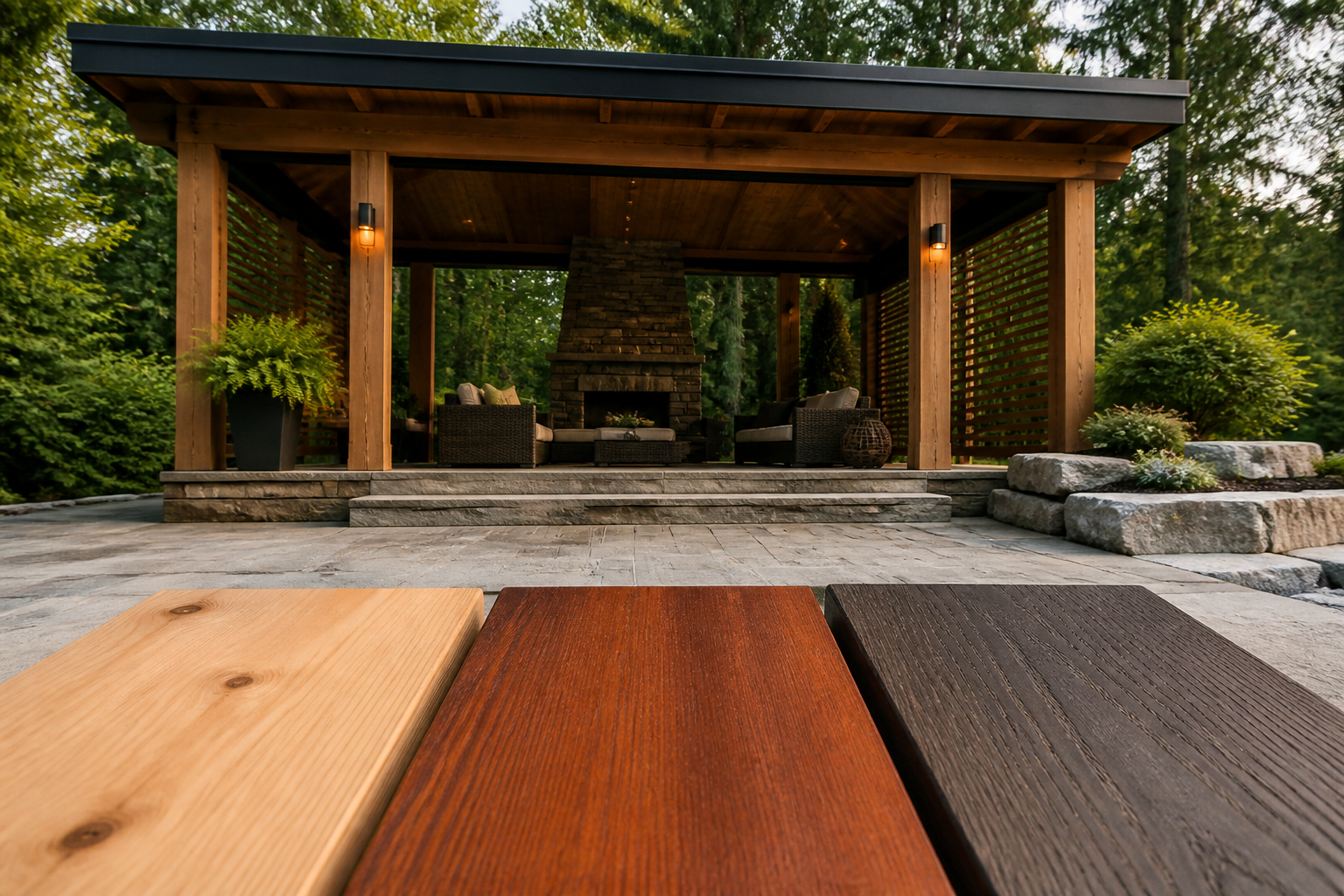
Choosing the best wood for an outdoor pavilion in Ontario involves balancing aesthetics, durability, and budget. For a classic look that weathers gracefully, Western Red Cedar is a strong contender. For maximum longevity and density, tropical hardwood Ipe is unmatched, though it carries a higher cost. Thermally Modified Ash offers a modern, stable alternative with excellent rot resistance.
Understanding the Role of Wood in a Pavilion's Design
A pavilion is more than just a roof; it’s a defining architectural element of your property. The choice of wood is the primary decision that dictates its character, its longevity, and its relationship with your home and landscape. This decision goes beyond colour. It impacts the structure's weight, its feel, and how it will endure decades of Ontario's hot summers and freezing winters.
At Headwaters, we design and build custom carpentry that is integral to the property's overall vision. Whether it's a poolside retreat in Caledon or a covered outdoor dining room in The Blue Mountains, the material must serve both the design intent and the practical demands of the site. We consider three primary options for high-end outdoor structures: Western Red Cedar, Ipe, and Thermally Modified Ash.
Western Red Cedar: The Ontario Classic
Western Red Cedar is a popular and fitting choice for country properties throughout our service area. Its warm, reddish-brown tones and distinct fragrance are appealing, but its functional properties are what make it a perennial favourite. It is naturally resistant to decay and insects thanks to its inherent oils, a critical feature for any outdoor structure.
Cedar is a softwood, which makes it lighter and easier to work with than hardwoods. This can translate to more design flexibility and simpler installation. However, its softness also means it is more susceptible to dents and scratches. If left untreated, cedar weathers to a beautiful, low-maintenance silver-grey patina that blends seamlessly into a naturalistic landscape.
- Aesthetic: Warm, traditional, and weathers to a classic silver.
- Durability: Good natural rot resistance; softer surface.
- Maintenance: Requires staining to maintain original colour; can be left to weather naturally.
- Best For: Properties seeking a timeless, rustic-yet-refined aesthetic that complements stone and native plantings.
Ipe: The Heavyweight for Unmatched Durability
Ipe (pronounced ee-pay) is a tropical hardwood from South America renowned for its incredible density and durability. Ipe's density contributes to its excellent fire resistance and a lifespan that can exceed 40-50 years, Ipe is in a class of its own. It's so dense that it resists rot, insects, and moisture penetration exceptionally well, making it a prime choice for pool surrounds and waterfront applications.
This durability comes with challenges. Ipe is extremely heavy, requiring a more robust foundation and framing. Its hardness demands specialized, high-quality carbide-tipped blades for cutting and pre-drilling for every fastener. Labour costs for Ipe construction are higher due to this complexity. When considering Ipe, ensuring it is FSC-certified is crucial for responsible forestry.
Like cedar, Ipe will weather to a silvery-grey if left untreated. Maintaining its rich brown colour requires regular application of a UV-blocking oil specifically formulated for dense hardwoods.
Thermally Modified Ash: A Modern, Stable Alternative
Thermally modified wood, often Ash or Pine, is a technologically advanced product that offers a compelling mix of benefits. The wood is heated to high temperatures in a low-oxygen environment, a process that changes its cellular structure. This “baking” removes organic compounds, making the wood highly resistant to rot and decay and, most importantly, extremely stable.
This dimensional stability is a major advantage in Ontario, where wood is subject to significant expansion and contraction between humid summers and dry winters. Thermally modified ash is far less likely to warp, twist, or cup than untreated wood. It has a consistent, often darker, colouring through the entire board. While very durable, it can be more brittle than non-modified woods.
More than just shelter, a pavilion's material choice is a statement about permanence and its relationship with the surrounding landscape.
| Feature | Western Red Cedar | Ipe | Thermally Modified Ash |
|---|---|---|---|
| Lifespan (Typical) | 15-25+ years | 40-75+ years | 25+ years |
| Hardness | Soft (dents easily) | Extremely Hard | Medium-Hard |
| Stability | Good | Very Good | Excellent |
| Maintenance (to preserve colour) | Moderate (stain every 2-3 years) | High (oil annually) | Low (oil every 3-5 years) |
| Aged Look (no finish) | Silver-grey | Light silver-grey | Darker grey/charcoal |
Key Factors Beyond Wood Species
Your material choice is just one part of a successful pavilion project. The supporting elements are just as critical for a structure that will last for generations.
- Foundations: The weight of an Ipe structure demands a more substantial foundation, such as engineered helical piles or deep concrete piers set below our regional frost line (typically around 48 inches). A lighter cedar structure may have different requirements. We assess soil conditions as part of our site assessment process to engineer the correct solution.
- Hardware and Fasteners: The fasteners must be compatible with the wood. With cedar and especially thermally modified woods, stainless steel fasteners are essential to prevent chemical reactions that cause black staining. For Ipe, hidden fastener systems are often used to maintain a clean surface.
- Finishes: Deciding whether to stain your pavilion or let it weather is a crucial aesthetic and maintenance decision. Staining preserves the wood's original colour but creates an ongoing maintenance schedule. Letting it weather to grey is a lower-maintenance path that many of our clients prefer for its natural look.
Integrating a Pavilion into Your Landscape Master Plan
A pavilion should never feel like an afterthought. It's a key vertical element that provides focal points, defines outdoor rooms, and offers shelter. The best outcomes are achieved when the structure is considered from the very beginning of the landscape design process.
This allows us to properly integrate it with other hardscape elements like a natural stone patio, walkways, a pool, and outdoor lighting. The pavilion's placement can frame a view, provide privacy, and create a natural flow through the property. For custom home builds, we often provide a builder partnership to ensure the landscape and architecture are in complete harmony.
The surrounding gardens are also key. Planting choices can soften the structure's base and tie it to the broader environment. We often use a mix of native and climate-appropriate species, as outlined in our Ontario plant palette guide, to ensure the landscape thrives around the new structure. Seeing how these elements come together in our portfolio of completed projects can provide valuable inspiration.
Ultimately, the best wood for your pavilion is the one that aligns with your property’s aesthetic, your long-term performance expectations, and the overall vision of your landscape master plan. To discuss the right approach for your property, we invite you to start a project with us.
Frequently asked
Questions, answered
- How long does it take to build a custom wood pavilion?
- The timeline for a custom pavilion varies widely with complexity, but design, permitting, and construction typically takes several months. A heavy timber Ipe structure will take longer than a comparable Western Red Cedar pavilion due to engineering and fabrication needs.
- Do I need a permit for an outdoor pavilion in Caledon or Mono?
- Generally, yes. Most structures over 10 square metres (108 sq. ft.) in municipalities like Caledon, Mono, and Mulmur require a building permit. Our design-build process includes managing the entire permit application process for you.
- What is the best foundation for a heavy timber pavilion in Ontario?
- For the clay and loam soils common in the Headwaters region, we typically specify engineered helical piles or concrete piers that extend below the 48-inch frost line. This prevents heaving and ensures long-term structural stability, especially for heavy Ipe or Douglas Fir structures.
- How often does a cedar or ipe structure need maintenance?
- If you wish to maintain the original wood colour, an Ipe pavilion will need to be oiled annually, while a cedar pavilion should be re-stained every 2-3 years. If you allow them to weather to a natural silver-grey, maintenance is minimal beyond occasional cleaning.
- Can you build a pavilion on a sloped property?
- Yes, absolutely. We specialize in designing for sloped and complex sites. This often involves integrating the pavilion with natural stone retaining walls and steps to create a level, functional area that works with the existing topography of your land.
Related on the site
Start a conversation
Planning a project in the Headwaters region?
We design and build across Hockley Valley, Caledon, Mulmur, Mono, King, and The Blue Mountains. Tell us about your property and we'll take it from there.
Book a discovery call →