
stonework
Selecting Armour Stone for Retaining Systems in Mono
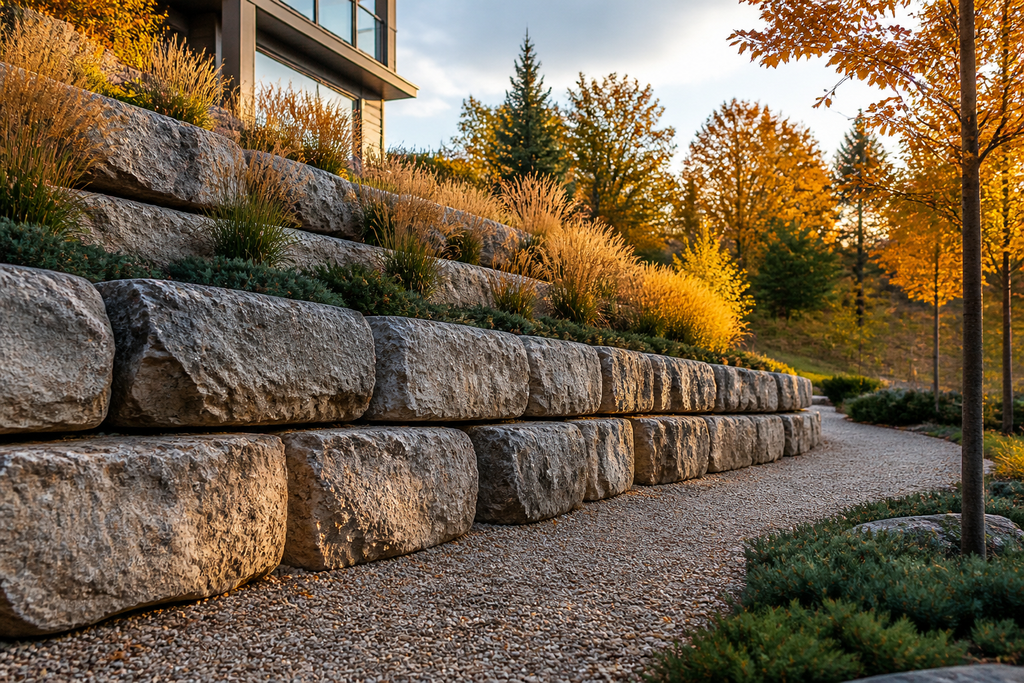
When planning landscaping in Mono, Ontario, selecting large-scale armour stone for structural retaining systems requires matching the stone’s geological weight to your property's specific slope. We look for dense, locally quarried limestone that provides immediate erosion control while blending naturally into the rugged terrain of the Headwaters region.
The Role of Scale in Structural Landscape Grading
When you look out your kitchen window at a steep, unusable slope, the solution isn't always obvious. Capturing that space and making it functional changes how you live outdoors. Properties set against the Niagara Escarpment demand materials that feel physically and visually grounded.
In our Mono landscape design and construction work, we frequently manage steep, rolling acreage. When you have an elevated property near the Bruce Trail, standard garden-wall blocks look entirely out of place. You need scale.
Large-scale armour stone retaining walls do two jobs at once. They hold back tons of earth to create flat, usable terraces, and they anchor the property visually. A two-ton block of limestone looks like it has always been there, providing a sense of permanence.
Sourcing Stone for High-End Hardscaping in Ontario
Not all rock is created equal. For durable natural stone retaining systems, we source material from specific Ontario quarries. The goal is to find stone that matches the native geology of your site, ensuring the new construction feels native to the region.
We generally choose between two finishes for large-scale walls: weathered and guillotined. Weathered limestone is pulled from the top layers of the quarry. It features natural seams, mossy crevices, and rounded edges. Guillotined stone is mechanically split, offering clean, flat faces and tight, uniform joints.
| Weathered Armour Stone | Guillotined Armour Stone |
|---|---|
| Natural, irregular edges and seams | Clean, machine-split faces |
| Blends instantly into rural estate settings | Suits modern or formal architecture |
| Wider gaps for intentional planting pockets | Tight, uniform architectural joints |
Terracing: Breaking Up Steep Grades
When dealing with significant elevation changes, a single towering wall can feel imposing. It also requires highly complex engineering to hold back that massive volume of earth safely. Instead, we frequently use a terracing approach to manage the slope.
By stepping the grade down through a series of shorter, tiered walls, we create flat, manageable planting beds between the stone layers. This significantly softens the overall look of the hillside.
The terraces become distinct garden zones. This approach is highly effective when reshaping land for beauty and function, allowing us to layer ornamental grasses and native shrubs that spill over the limestone edges.
Engineering for Mono's Rocky Ground
A retaining wall is only as strong as what lies beneath it. Mono is known for its rocky ground and complex soil profiles. Building a structural wall here means digging well past the topsoil and carefully managing the water that moves through the slope.
We excavate a wide trench and build a foundational base of heavily compacted gravel. Behind the stone, we install a continuous column of clear drainage gravel wrapped in filter fabric (a permeable cloth that stops soil from clogging the stones).
For taller walls, we incorporate geogrid (a heavy-duty plastic mesh that locks the gravel and soil layers together). This prevents the slope management stone from tipping forward under the immense pressure of wet, heavy earth.
Navigating Site Access for Heavy Stone Machinery
Installing massive stone blocks is not a subtle process. It involves large excavators, skid steers, and flatbed delivery trucks. Before a single stone is set on your property, we have to solve the puzzle of site access and material staging.
We map out dedicated haul routes across the landscape. Our goal is to protect your existing infrastructure—driveways, septic fields, and mature tree roots. In some cases, we lay down heavy timber mats to distribute the weight of the machines and prevent deep ruts in the soil.
Blending Armour Stone Retaining Walls into the Landscape
Raw stone can feel harsh if left entirely on its own. The best high-end hardscaping Ontario properties balance heavy rock with lush, cascading planting. We leave intentional voids between weathered blocks to tuck in creeping thyme or trailing juniper.
Lighting is equally critical to the final design. Because many Mono properties sit in valleys with short evening light, shadows fall early in the afternoon. Thoughtful illumination extends the beauty of the stonework well into the night.
Well-placed uplighting catches the rugged texture of the limestone, turning a functional retaining wall into a glowing architectural feature after dusk.
When we are planting a living retaining wall, the goal is to make the stone look like an ancient ruin that the garden has slowly reclaimed.
Planning Your Slope Management Stone This Fall
We are currently in late fall, which is the perfect window to plan next year's structural grading work. Large-scale stone installations require heavy logistics. We need to secure the right material from the quarry, finalize the engineering drawings, and map out equipment access.
Rushing a structural build in the spring often leads to compromises. By designing the wall system now, we can secure permits and schedule the excavation for as soon as the ground thaws next season.
- Assess the slope and determine the required wall height and terracing.
- Select the stone style (weathered or guillotined) to match the home's architecture.
- Complete grading plans and secure municipal conservation permits.
- Book the heavy equipment and quarry deliveries for early spring.
If you are looking at a challenging slope and wondering how to reclaim that space, reach out to start a project. We can walk the property together and discuss how natural stone can bring structure and beauty to your landscape.
Frequently asked
Questions, answered
- Do I need a permit to build an armour stone retaining wall in Mono?
- Yes, in Mono, retaining walls over a certain height typically require a building permit and engineered drawings. If your property falls under the Nottawasaga Valley Conservation Authority (NVCA) jurisdiction, you will also need their approval before we begin any structural grading.
- How long does it take to build a large-scale natural stone retaining system?
- Timelines and budgets vary widely with site conditions, wall length, and site access. A modest terrace wall might take a week, while extensive hillside terracing can take several weeks of heavy machine work and precise stone placement.
- Can we plant directly into the face of an armour stone wall?
- Yes, we frequently leave intentional gaps between weathered limestone blocks to create planting pockets. We pack these voids with quality soil and select drought-tolerant perennials that thrive in rocky crevices, softening the hardscape.
- Why do you use clear gravel behind the retaining wall instead of soil?
- Soil holds moisture, which expands when it freezes and pushes aggressively against the stone. Clear gravel allows groundwater to drop instantly to the drain pipe at the base, relieving hydrostatic pressure and preventing frost heave during Ontario winters.
- Is fall a good time to start planning a retaining wall project?
- Fall is the ideal time for planning, engineering, and securing permits. By finalizing the design before winter arrives, we can reserve the stone at the quarry and schedule the heavy excavation for early spring as soon as the ground thaws.
Related on the site
Start a conversation
Planning a project in the Headwaters region?
We design and build across Hockley Valley, Caledon, Mulmur, Mono, King, and The Blue Mountains. Tell us about your property and we'll take it from there.
Book a discovery call →